
Marathi Festival List 2026 (मराठी सण आणि उत्सव)
Complete Marathi calendar festival dates, Ekadashi Vrats, and Maharashtra public holidays for 2026 (Shaka 1947–1948). Check exact dates, daily Tithi, and rituals for Gudi Padwa, Ganesh Chaturthi, Diwali, and Ashadhi Ekadashi.
Upcoming Major Festivals 2026 (आगामी सण)
Makar Sankranti
मकर संक्रांती २०२६
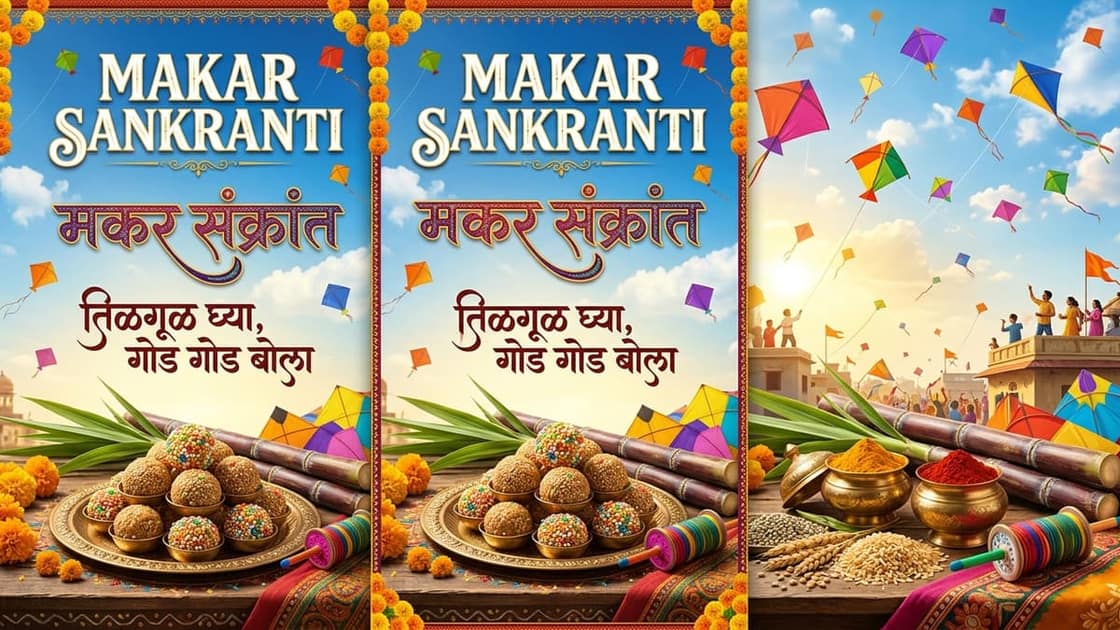
Makar Sankranti (मकर संक्रांती) is one of the most culturally cherished, astronomical, and joyful solar festivals celebrated across Maharashtra. Unlike the majority of Hindu festivals governed by the lunar calendar, Makar Sankranti follows the solar cycle, marking the exact celestial moment when the Sun God (**Surya Bhagwan**) enters the zodiac sign of Capricorn (**Makar Rashi**). This cosmic event marks the commencement of **Uttarayan** — the auspicious six-month northward transit of the sun, bringing longer daylight hours, warmer days, and the celebration of the bountiful winter harvest. In Maharashtra, the festival spans three consecutive celebration days: **Bhogi (भोगी)**, **Sankranti (संक्रांती)**, and **Kinkranti (किंक्रांती / Kar Din)**. On Bhogi (the day prior), families prepare the iconic **Bhogichi Bhaji** — an earthen pot medley of winter harvest vegetables (eggplant, tender green chickpeas, carrots, flat beans) infused with roasted sesame and fresh coconut, savored with piping hot **Bajra Bhakri** smothered with fresh white churned butter (**Loni**). On Sankranti day, the air is filled with greetings of *'तिळगूळ घ्या, आणि गोड गोड बोला!'* (Tilgul ghya, aani god god bola — 'Accept this sweet sesame-jaggery, and speak sweetly to one another'). Sesame (Til) and unrefined cane jaggery (Gul) hold deep Ayurvedic significance, generating essential body warmth and nourishing the skin during dry winter. Married women celebrate **Haldi-Kunku (हळदी-कुंकू)** across the month of Paush, wearing elegant black sarees (especially the traditional **Chandrakala** silk saree) adorned with ornaments crafted from delicate sugar beads (**Halwyache Dagane**). Rooftops in cities like Pune, Nagpur, Solapur, and Nashik buzz with high-flying kite duels under clear blue skies.

Vasant Panchami
वसंत पंचमी
Vasant Panchami is one of the most culturally cherished and spiritually uplifting festivals celebrated across Maharashtra. Deeply woven into the fabric of Maharashtrian heritage, Vasant Panchami brings families, neighbors, and entire communities together in joyful devotion and festive harmony. From the crack of dawn, households across Maharashtra prepare for Vasant Panchami with sacred enthusiasm. Entrances of homes are scrubbed clean, framed with vibrant torans of fresh marigolds and mango leaves, and adorned with elaborate Rangoli patterns created using bright natural powders. Women dress in traditional Maharashtrian attire, such as elegant Paithani or Nauvari sarees, while men wear traditional Kurta-Pyjamas or Dhotis. The atmosphere during Vasant Panchami in Maharashtrian households is filled with divine warmth and fragrant incense. Families gather around the home altar for sacred Pujan, offering fresh flowers, sandalwood paste, lighted clay lamps (Diyas), and traditional sweet Naivedya. Beyond religious observance, Vasant Panchami is a time of heartfelt hospitality, where relatives and neighbors visit each other's homes to exchange blessings, share homemade culinary delicacies, and pass down ancient customs to the younger generation.

Ratha Saptami
रथसप्तमी
Ratha Saptami is one of the most culturally cherished and spiritually uplifting festivals celebrated across Maharashtra. Deeply woven into the fabric of Maharashtrian heritage, Ratha Saptami brings families, neighbors, and entire communities together in joyful devotion and festive harmony. From the crack of dawn, households across Maharashtra prepare for Ratha Saptami with sacred enthusiasm. Entrances of homes are scrubbed clean, framed with vibrant torans of fresh marigolds and mango leaves, and adorned with elaborate Rangoli patterns created using bright natural powders. Women dress in traditional Maharashtrian attire, such as elegant Paithani or Nauvari sarees, while men wear traditional Kurta-Pyjamas or Dhotis. The atmosphere during Ratha Saptami in Maharashtrian households is filled with divine warmth and fragrant incense. Families gather around the home altar for sacred Pujan, offering fresh flowers, sandalwood paste, lighted clay lamps (Diyas), and traditional sweet Naivedya. Beyond religious observance, Ratha Saptami is a time of heartfelt hospitality, where relatives and neighbors visit each other's homes to exchange blessings, share homemade culinary delicacies, and pass down ancient customs to the younger generation.
Maharashtra Festival Calendar 2026 (44 सण)
Makar Sankranti
मकर संक्रांती २०२६
Makar Sankranti (मकर संक्रांती) is one of the most culturally cherished, astronomical, and joyful solar festivals celebrated across Maharashtra. Unlike the majority of Hindu festivals governed by the lunar calendar, Makar Sankranti follows the solar cycle, marking the exact celestial moment when the Sun God (**Surya Bhagwan**) enters the zodiac sign of Capricorn (**Makar Rashi**). This cosmic event marks the commencement of **Uttarayan** — the auspicious six-month northward transit of the sun, bringing longer daylight hours, warmer days, and the celebration of the bountiful winter harvest. In Maharashtra, the festival spans three consecutive celebration days: **Bhogi (भोगी)**, **Sankranti (संक्रांती)**, and **Kinkranti (किंक्रांती / Kar Din)**. On Bhogi (the day prior), families prepare the iconic **Bhogichi Bhaji** — an earthen pot medley of winter harvest vegetables (eggplant, tender green chickpeas, carrots, flat beans) infused with roasted sesame and fresh coconut, savored with piping hot **Bajra Bhakri** smothered with fresh white churned butter (**Loni**). On Sankranti day, the air is filled with greetings of *'तिळगूळ घ्या, आणि गोड गोड बोला!'* (Tilgul ghya, aani god god bola — 'Accept this sweet sesame-jaggery, and speak sweetly to one another'). Sesame (Til) and unrefined cane jaggery (Gul) hold deep Ayurvedic significance, generating essential body warmth and nourishing the skin during dry winter. Married women celebrate **Haldi-Kunku (हळदी-कुंकू)** across the month of Paush, wearing elegant black sarees (especially the traditional **Chandrakala** silk saree) adorned with ornaments crafted from delicate sugar beads (**Halwyache Dagane**). Rooftops in cities like Pune, Nagpur, Solapur, and Nashik buzz with high-flying kite duels under clear blue skies.
Vasant Panchami
वसंत पंचमी
Vasant Panchami is one of the most culturally cherished and spiritually uplifting festivals celebrated across Maharashtra. Deeply woven into the fabric of Maharashtrian heritage, Vasant Panchami brings families, neighbors, and entire communities together in joyful devotion and festive harmony. From the crack of dawn, households across Maharashtra prepare for Vasant Panchami with sacred enthusiasm. Entrances of homes are scrubbed clean, framed with vibrant torans of fresh marigolds and mango leaves, and adorned with elaborate Rangoli patterns created using bright natural powders. Women dress in traditional Maharashtrian attire, such as elegant Paithani or Nauvari sarees, while men wear traditional Kurta-Pyjamas or Dhotis. The atmosphere during Vasant Panchami in Maharashtrian households is filled with divine warmth and fragrant incense. Families gather around the home altar for sacred Pujan, offering fresh flowers, sandalwood paste, lighted clay lamps (Diyas), and traditional sweet Naivedya. Beyond religious observance, Vasant Panchami is a time of heartfelt hospitality, where relatives and neighbors visit each other's homes to exchange blessings, share homemade culinary delicacies, and pass down ancient customs to the younger generation.
Ratha Saptami
रथसप्तमी
Ratha Saptami is one of the most culturally cherished and spiritually uplifting festivals celebrated across Maharashtra. Deeply woven into the fabric of Maharashtrian heritage, Ratha Saptami brings families, neighbors, and entire communities together in joyful devotion and festive harmony. From the crack of dawn, households across Maharashtra prepare for Ratha Saptami with sacred enthusiasm. Entrances of homes are scrubbed clean, framed with vibrant torans of fresh marigolds and mango leaves, and adorned with elaborate Rangoli patterns created using bright natural powders. Women dress in traditional Maharashtrian attire, such as elegant Paithani or Nauvari sarees, while men wear traditional Kurta-Pyjamas or Dhotis. The atmosphere during Ratha Saptami in Maharashtrian households is filled with divine warmth and fragrant incense. Families gather around the home altar for sacred Pujan, offering fresh flowers, sandalwood paste, lighted clay lamps (Diyas), and traditional sweet Naivedya. Beyond religious observance, Ratha Saptami is a time of heartfelt hospitality, where relatives and neighbors visit each other's homes to exchange blessings, share homemade culinary delicacies, and pass down ancient customs to the younger generation.
Maha Shivaratri
महाशिवरात्री २०२६
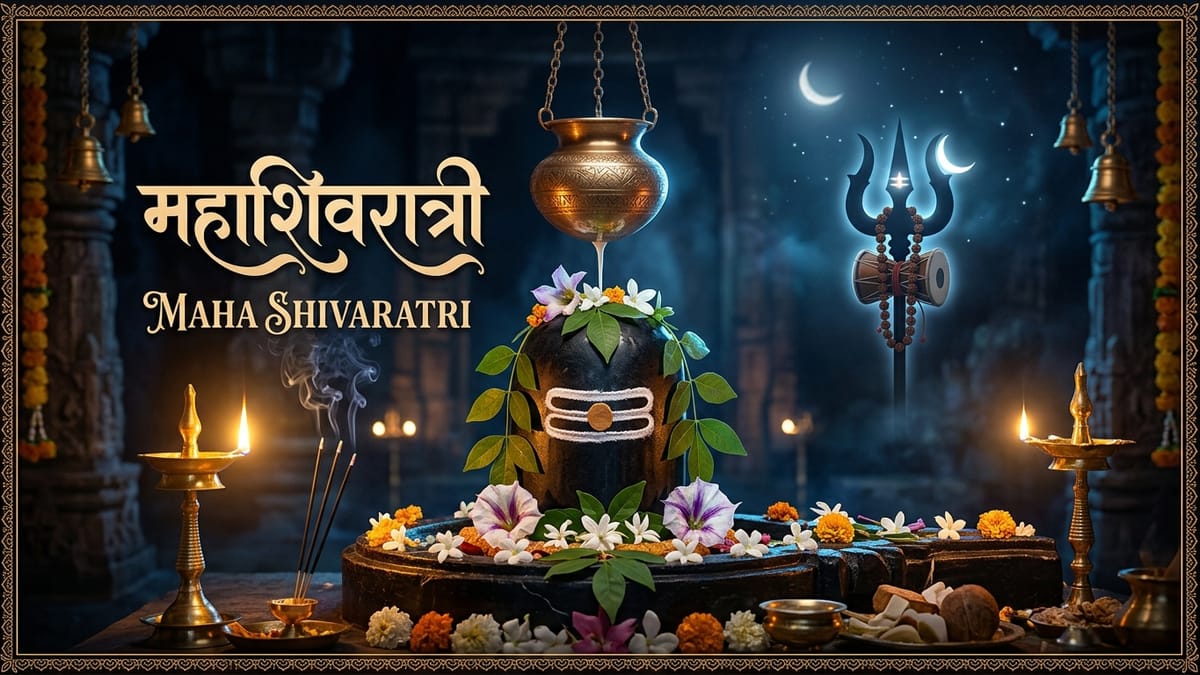
Maha Shivaratri (महाशिवरात्री) is one of the most auspicious, spiritually profound, and energetically charged nights celebrated across Maharashtra. Falling on Magha Krishna Chaturdashi (according to the Amavasyant Marathi Panchang), this night marks the divine convergence of Shiva and Shakti — the celestial marriage of Lord Shiva with Goddess Parvati, and the cosmic night when Lord Shiva performed the divine dance of creation, preservation, and dissolution (**Tandava Nritya**). Maharashtra holds an extraordinary spiritual connection to Lord Shiva, being blessed with five of the twelve revered **Jyotirlingas** across India: **Trimbakeshwar** (Nashik), **Bhimashankar** (Pune/Sahyadris), **Grishneshwar** (Ellora, Chhatrapati Sambhajinagar), **Aundha Nagnath** (Hingoli), and **Parli Vaijnath** (Beed). Millions of devotees undertake pilgrimages to these ancient rock-cut sanctums, chanting *'हर हर महादेव!'* and *'ॐ नमः शिवाय!'*. In homes and temples throughout the state, devotees observe an unbroken 24-hour fast (**Upavas**) and an all-night spiritual vigil (**Jagaran**). The centerpiece of Maha Shivaratri worship is the **Char Prahar Puja** (four-quarter night worship), during which the sacred Shiva Linga is bathed continuously with holy water, unboiled milk, honey, sugarcane juice, and curd (Panchamrit Abhishekam), accompanied by offerings of fragrant trifoliate **Bilvapatra (बेलपत्र)**, white dhatura flowers, and cooling bhasma (vibhuti).
Holika Dahan
होलिका दहन
Holika Dahan is one of the most culturally cherished and spiritually uplifting festivals celebrated across Maharashtra. Deeply woven into the fabric of Maharashtrian heritage, Holika Dahan brings families, neighbors, and entire communities together in joyful devotion and festive harmony. From the crack of dawn, households across Maharashtra prepare for Holika Dahan with sacred enthusiasm. Entrances of homes are scrubbed clean, framed with vibrant torans of fresh marigolds and mango leaves, and adorned with elaborate Rangoli patterns created using bright natural powders. Women dress in traditional Maharashtrian attire, such as elegant Paithani or Nauvari sarees, while men wear traditional Kurta-Pyjamas or Dhotis. The atmosphere during Holika Dahan in Maharashtrian households is filled with divine warmth and fragrant incense. Families gather around the home altar for sacred Pujan, offering fresh flowers, sandalwood paste, lighted clay lamps (Diyas), and traditional sweet Naivedya. Beyond religious observance, Holika Dahan is a time of heartfelt hospitality, where relatives and neighbors visit each other's homes to exchange blessings, share homemade culinary delicacies, and pass down ancient customs to the younger generation.
Holi (Dhulivandan)
होळी / धुलिवंदन
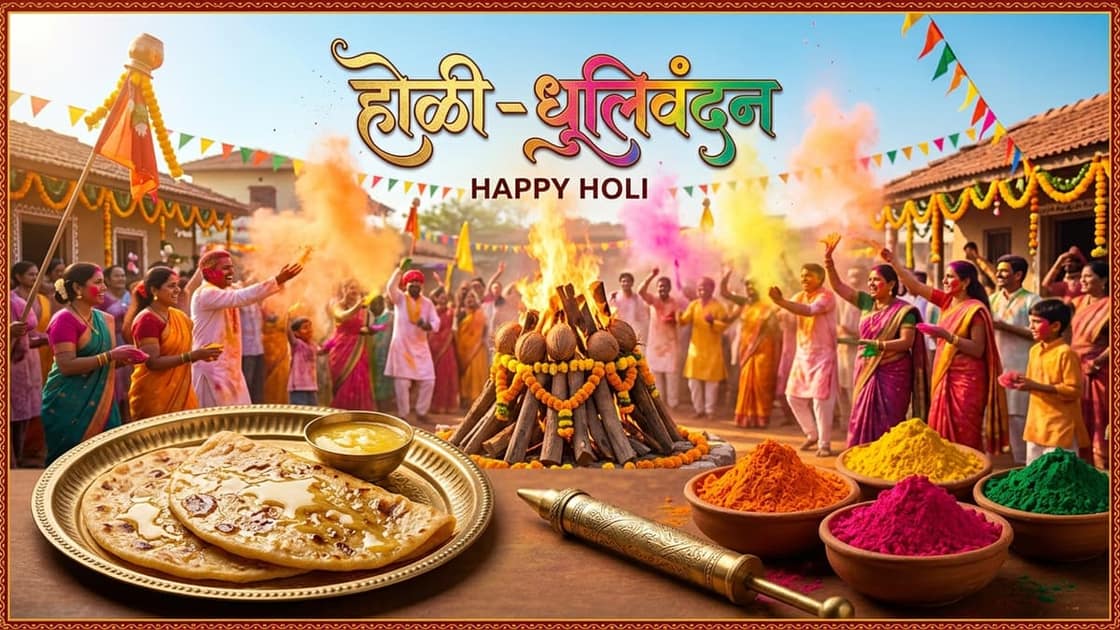
Holi (Dhulivandan) is one of the most culturally cherished and spiritually uplifting festivals celebrated across Maharashtra. Deeply woven into the fabric of Maharashtrian heritage, Holi (Dhulivandan) brings families, neighbors, and entire communities together in joyful devotion and festive harmony. From the crack of dawn, households across Maharashtra prepare for Holi (Dhulivandan) with sacred enthusiasm. Entrances of homes are scrubbed clean, framed with vibrant torans of fresh marigolds and mango leaves, and adorned with elaborate Rangoli patterns created using bright natural powders. Women dress in traditional Maharashtrian attire, such as elegant Paithani or Nauvari sarees, while men wear traditional Kurta-Pyjamas or Dhotis. The atmosphere during Holi (Dhulivandan) in Maharashtrian households is filled with divine warmth and fragrant incense. Families gather around the home altar for sacred Pujan, offering fresh flowers, sandalwood paste, lighted clay lamps (Diyas), and traditional sweet Naivedya. Beyond religious observance, Holi (Dhulivandan) is a time of heartfelt hospitality, where relatives and neighbors visit each other's homes to exchange blessings, share homemade culinary delicacies, and pass down ancient customs to the younger generation.
Rang Panchami
रंगपंचमी
Rang Panchami is one of the most culturally cherished and spiritually uplifting festivals celebrated across Maharashtra. Deeply woven into the fabric of Maharashtrian heritage, Rang Panchami brings families, neighbors, and entire communities together in joyful devotion and festive harmony. From the crack of dawn, households across Maharashtra prepare for Rang Panchami with sacred enthusiasm. Entrances of homes are scrubbed clean, framed with vibrant torans of fresh marigolds and mango leaves, and adorned with elaborate Rangoli patterns created using bright natural powders. Women dress in traditional Maharashtrian attire, such as elegant Paithani or Nauvari sarees, while men wear traditional Kurta-Pyjamas or Dhotis. The atmosphere during Rang Panchami in Maharashtrian households is filled with divine warmth and fragrant incense. Families gather around the home altar for sacred Pujan, offering fresh flowers, sandalwood paste, lighted clay lamps (Diyas), and traditional sweet Naivedya. Beyond religious observance, Rang Panchami is a time of heartfelt hospitality, where relatives and neighbors visit each other's homes to exchange blessings, share homemade culinary delicacies, and pass down ancient customs to the younger generation.
Gudi Padwa
गुढी पाडवा २०२६
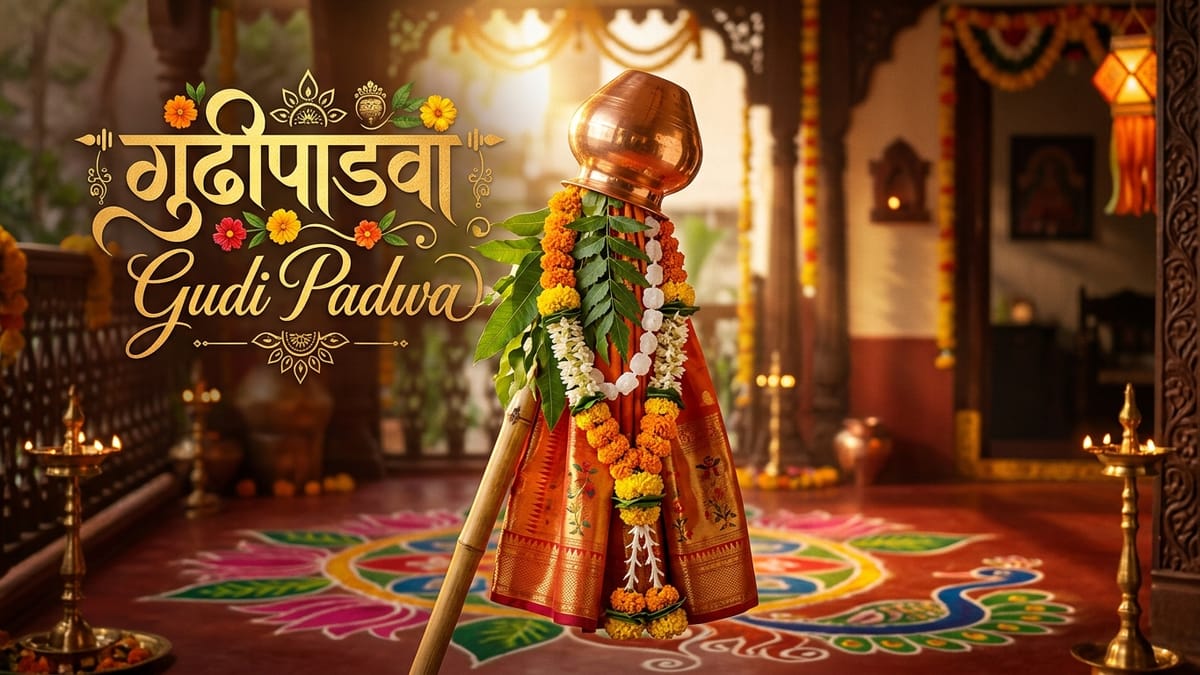
Gudi Padwa marks the grand arrival of the Marathi New Year, celebrated on Chaitra Shukla Pratipada (the first day of the bright fortnight of the Hindu month of Chaitra). In Maharashtra, Gudi Padwa is not merely a date change on the calendar — it is an outpouring of cultural joy, new hope, and deep spiritual renewal that coincides with the blooming of spring across the Deccan Plateau. From early morning, Maharashtrian households come alive with festive bustle. Thresholds of homes are scrubbed clean, decorated with intricate Rangoli motifs incorporating swastikas and peacocks, and framed with vibrant torans of fresh marigold flowers and mango leaves. The centerpiece of every home is the **Gudi** — a long bamboo pole wrapped in a gleaming silk cloth (usually green, yellow, or crimson Khan/Paithani fabric), topped with neem twigs, mango leaves, a garland of marigolds, and a string of traditional sugar candy (**Gaathi**), capped with an inverted polished silver or brass pot (**Kalash**). Hoisted proudly outside windows, balconies, or main entrances facing the rising sun, the Gudi is an enduring emblem of victory, protection, and divine blessings. Across cities like Mumbai, Pune, Nashik, and Nagpur, massive **Shobha Yatras** (cultural processions) fill the streets. Men and women dressed in traditional Maharashtrian attire — men in white Dhotis and saffron Phetas (turbans), and women in elegant Nauvari (nine-yard) sarees — ride motorbikes, play traditional Dhol-Tasha drums, and perform Lezim dances. Families gather early to consume the medicinal Neem-jaggery prasad before sitting down to a lavish festive feast centered around **Shrikhand Puri** and **Puran Poli**.
Ram Navami
राम नवमी २०२६
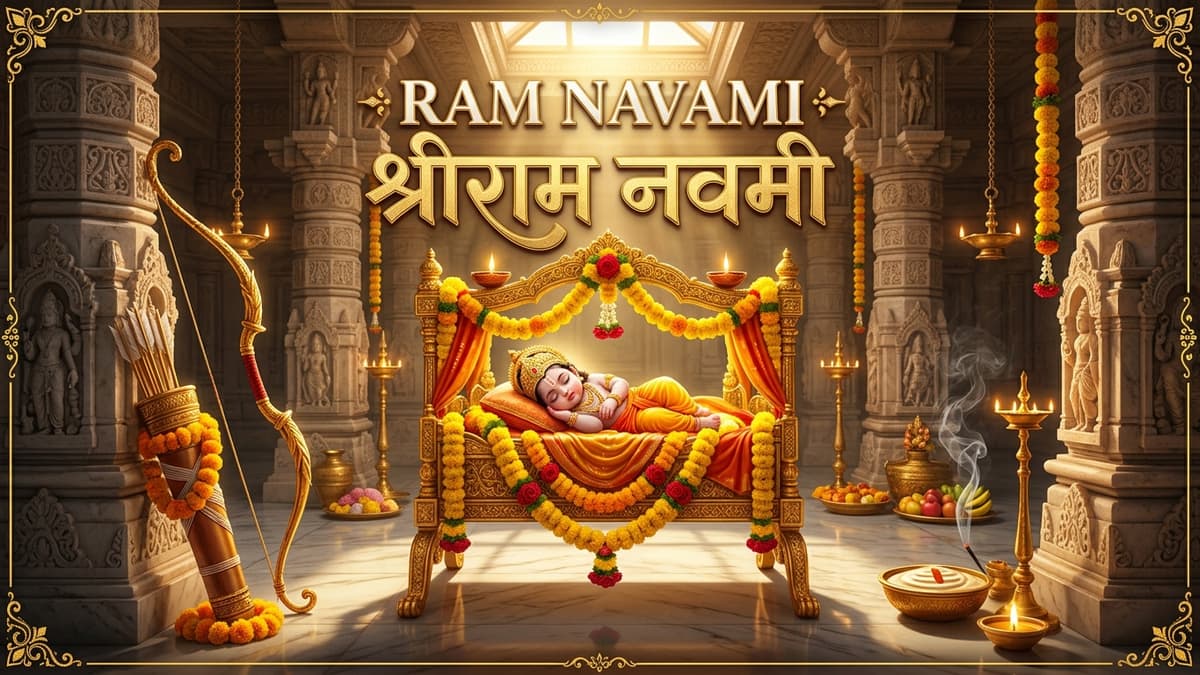
Ram Navami (रामनवमी) is celebrated with heartfelt devotion across Maharashtra, marking the auspicious birth of Maryada Purushottam Lord Rama at precisely high noon (Madhyahna Kaal). It also represents the divine culmination of the nine-day Chaitra Vasantik Navratri. In iconic Maharashtrian shrines like the historic **Kalaram Temple** in Panchavati (Nashik — where Lord Rama spent years of his Vanvas exile), Ram Mandirs in Pune, and historic Mathas across the state, congregations gather from 10:00 AM onwards for the devotional *Kirtan* recital recounting the Ramayana. As the clock strikes 12:00 PM noon, the temple conch shells resound, bells chime enthusiastically, and a silken veil over the flower-decked baby cradle is lifted. Devotees shower fragrant Gulal and fresh flower petals, singing the immortal Marathi lullaby: *'श्रीरामचंद्र कृपाळू भजु मन, हरण भवभय दारुणं'* and *'पाळणा सजवा ग बाई, श्रीराम जन्मले!'*. The signature culinary hallmark of Ram Navami across every Maharashtrian household is **Sunthwada (सुंठवडा)** — a warm, peppery, restorative dry prasad made from powdered dry ginger (Sunth), crushed sugar or jaggery, grated dry coconut (Khobara), cardamom, and nutmeg. Because it is given to new mothers in Ayurveda after childbirth, offering Sunthwada on Ram Navami honors Mother Kaushalya and revives seekers under the blazing Chaitra afternoon sun.
Hanuman Jayanti
हनुमान जयंती २०२६
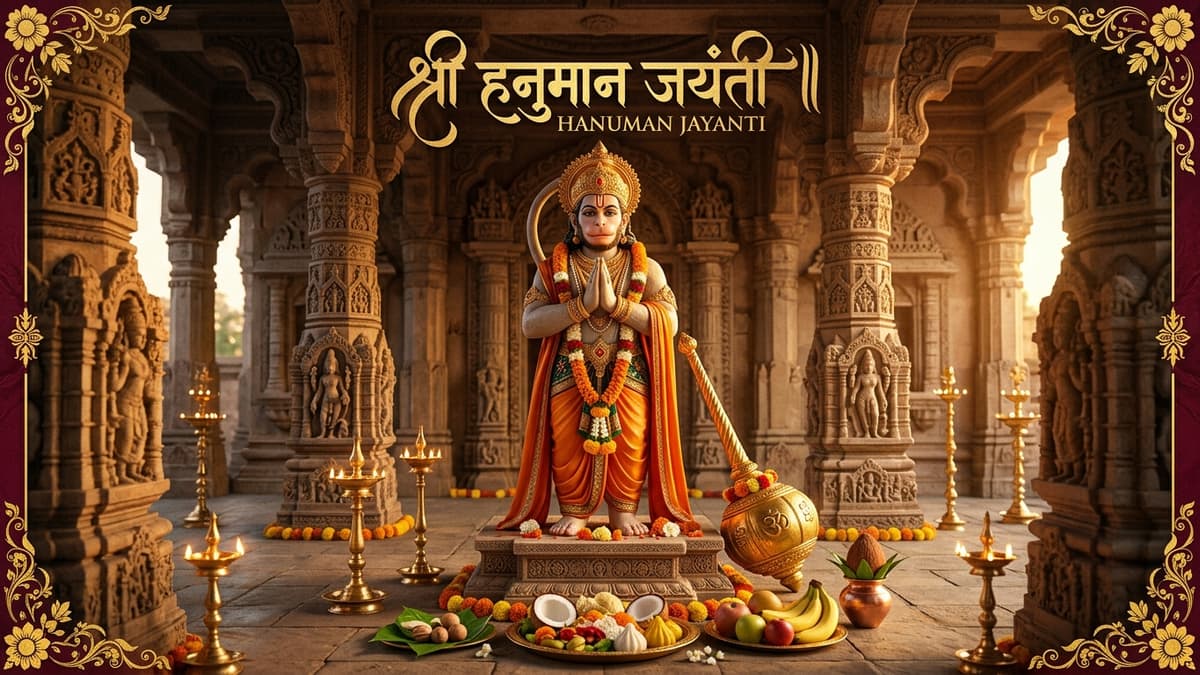
Hanuman Jayanti (हनुमान जयंती / मारुती जन्मोत्सव) is celebrated with electrifying energy and spiritual fervor across Maharashtra on the full moon day of Chaitra (Chaitra Shukla Purnima). In Maharashtra, where Lord Hanuman is revered by the affectionate names **Maruti (मारुती)**, **Bajrangbali**, and **Anjaniputra**, the celebrations commence well before daybreak, as Lord Hanuman's birth took place precisely at the moment of sunrise (**Surya Udaya**). By 05:00 AM, traditional wrestling gyms (**Talim / Akhada**) and Maruti temples in Kolhapur, Sangli, Satara, Pune, and Vidarbha are abuzz. Devotees line up bearing offerings of bright orange **Shendur (शेंदूर / Sindoor)** mixed with pure sesame or mustard oil, garlanding the idol with garlands of purple-and-white crown flowers (**रुईची फुले - Calotropis**) and strings of betel leaves (**विडा**). At the exact moment the golden sunrise strikes the horizon (around 06:21 AM), temple bells clang vigorously, conch horns blare, and priests perform the grand **Janmotsav Aarti**, showering sanctified Gulal while thousands chant Samarth Ramdas Swami's rousing stotra: *'भीमरूपी महारुद्रा वज्रहनुमान मारुती | वनारी अंजनीसुता रामदूता प्रभंजना ||'*. Across Maharashtra, Hanuman is not merely a deity of worship but the embodiment of physical strength (**Bala**), mental restraint (**Brahmacharya**), intellect (**Buddhi**), and selfless devotion (**Seva**). Wrestlers in rural Maharashtra touch the feet of the Maruti idol before entering the sacred red mud (*Matee*) pit, seeking his blessings for invincible endurance and clean character.
Akshaya Tritiya
अक्षय तृतीया २०२६
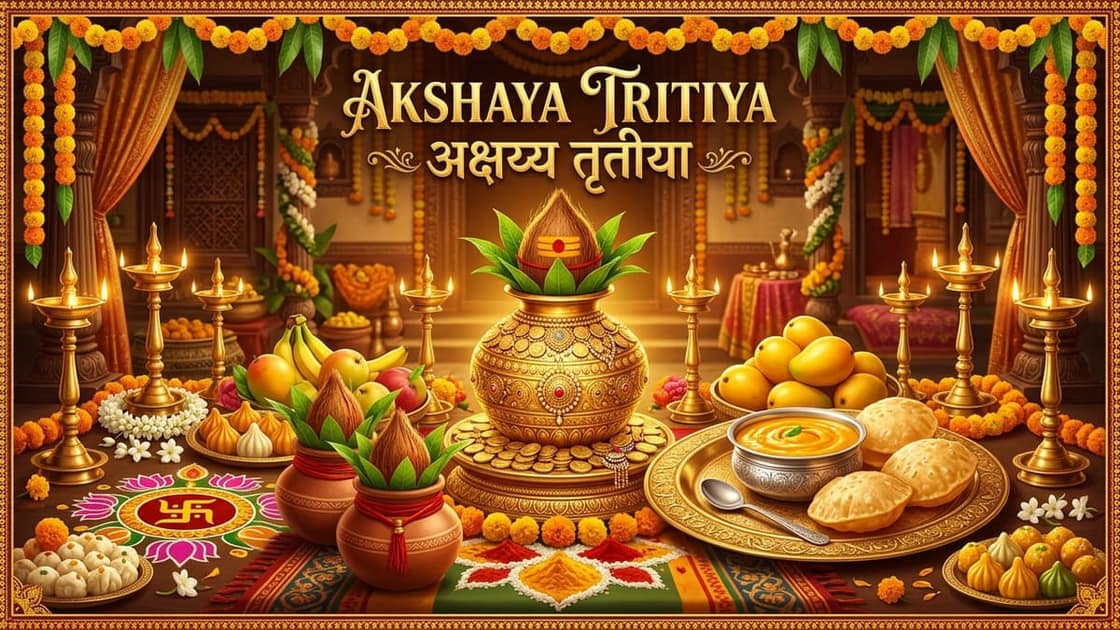
Akshaya Tritiya (अक्षय्य तृतीया / आखाती), occurring on the third lunar day of the bright fortnight of Vaishakh, is revered across Maharashtra as one of the quintessential **Sade-Teen Muhurtas (साडेतीन मुहूर्त)** — the three-and-a-half self-illumined, inherently flawless astrological days when no planetary flaw (Dosha) exists and any venture started is deemed imperishable (**Akshaya**, meaning decayless and inexhaustible). In Maharashtra, Akshaya Tritiya heralds the official royal debut of the King of Fruits: the golden **Hapus (Alphonso)** mango. Before this day, traditional families refrain from consuming the season's mangoes; only on Akshaya Tritiya is the first freshly squeezed batch of silky **Aamras (आमरस)** offered as divine Naivedya to the family deities and departed ancestors. The festival table is an intoxicating Maharashtrian feast of fluffy golden puris, spiced **Aamba Dal (आंबा डाळ)** made from soaked chana dal and sour raw mango, crisp kurdai, and potato bhaji. Beyond buying gold coins and ornaments at jewellers in Zaveri Bazaar, Laxmi Road, and Sarafa Bazars, rural and traditional Maharashtra practices the deeply compassionate Vedic ritual of **Udaka Kumbha Daan (उदक कुंभ दान)**. Families donate earthen water pots (Surai or Ranjan) filled with cool water, fragrant vetiver (Vala / Khus), and sweet melon to travelers and priests, honoring both ancestral spirits and shielding fellow beings from the merciless Vaishakh summer sun. In Khandesh and North Maharashtra, this day is celebrated as **Akhaji (आखाजी)**, where young women hang swings on fragrant mango trees and celebrate with folk songs.
Narasimha Jayanti
नृसिंह जयंती
Narasimha Jayanti is one of the most culturally cherished and spiritually uplifting festivals celebrated across Maharashtra. Deeply woven into the fabric of Maharashtrian heritage, Narasimha Jayanti brings families, neighbors, and entire communities together in joyful devotion and festive harmony. From the crack of dawn, households across Maharashtra prepare for Narasimha Jayanti with sacred enthusiasm. Entrances of homes are scrubbed clean, framed with vibrant torans of fresh marigolds and mango leaves, and adorned with elaborate Rangoli patterns created using bright natural powders. Women dress in traditional Maharashtrian attire, such as elegant Paithani or Nauvari sarees, while men wear traditional Kurta-Pyjamas or Dhotis. The atmosphere during Narasimha Jayanti in Maharashtrian households is filled with divine warmth and fragrant incense. Families gather around the home altar for sacred Pujan, offering fresh flowers, sandalwood paste, lighted clay lamps (Diyas), and traditional sweet Naivedya. Beyond religious observance, Narasimha Jayanti is a time of heartfelt hospitality, where relatives and neighbors visit each other's homes to exchange blessings, share homemade culinary delicacies, and pass down ancient customs to the younger generation.

Buddha Purnima
बुद्ध पौर्णिमा
Buddha Purnima is one of the most culturally cherished and spiritually uplifting festivals celebrated across Maharashtra. Deeply woven into the fabric of Maharashtrian heritage, Buddha Purnima brings families, neighbors, and entire communities together in joyful devotion and festive harmony. From the crack of dawn, households across Maharashtra prepare for Buddha Purnima with sacred enthusiasm. Entrances of homes are scrubbed clean, framed with vibrant torans of fresh marigolds and mango leaves, and adorned with elaborate Rangoli patterns created using bright natural powders. Women dress in traditional Maharashtrian attire, such as elegant Paithani or Nauvari sarees, while men wear traditional Kurta-Pyjamas or Dhotis. The atmosphere during Buddha Purnima in Maharashtrian households is filled with divine warmth and fragrant incense. Families gather around the home altar for sacred Pujan, offering fresh flowers, sandalwood paste, lighted clay lamps (Diyas), and traditional sweet Naivedya. Beyond religious observance, Buddha Purnima is a time of heartfelt hospitality, where relatives and neighbors visit each other's homes to exchange blessings, share homemade culinary delicacies, and pass down ancient customs to the younger generation.
Ashadhi Ekadashi
आषाढी एकादशी
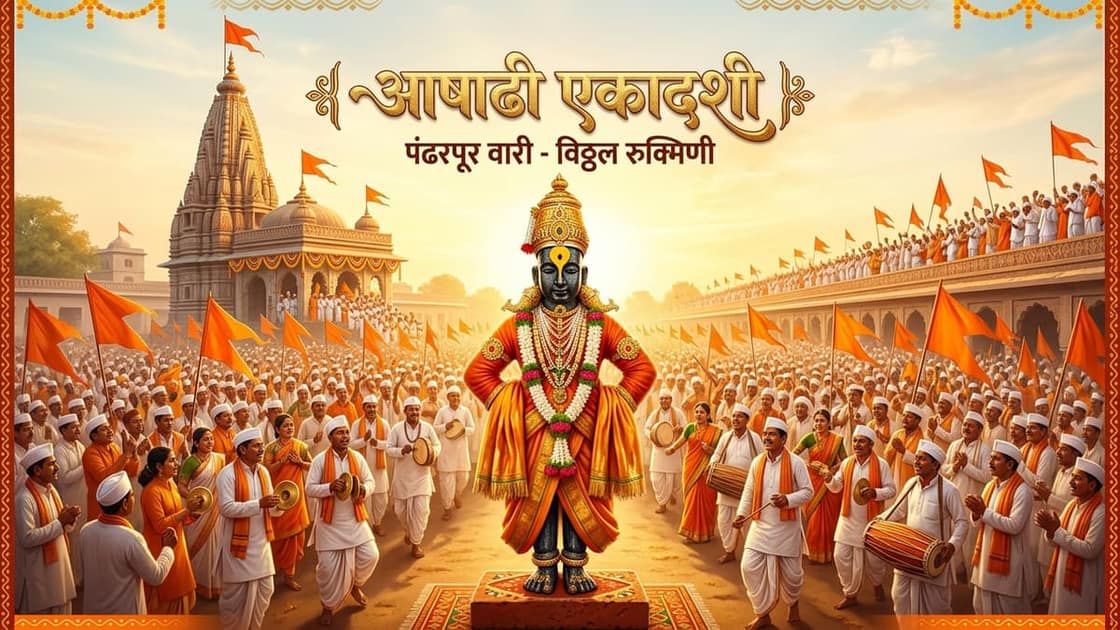
Ashadhi Ekadashi (Devshayani Ekadashi) is the spiritual crown jewel of Maharashtra's devotional history. Occurring on the eleventh lunar day of Ashadha month, it represents the grand culmination of the historic **Pandharpur Wari** — an 800-year-old annual barefoot pilgrimage where over one million devotees (**Varkaris**) march across Maharashtra to the sacred town of Pandharpur. For nearly three weeks leading up to Ashadhi Ekadashi, Varkaris walk hundreds of kilometers singing ecstatic Abhangas (hymns) composed by saint-poets like Sant Dnyaneshwar, Sant Tukaram, Sant Namdev, Sant Eknath, and Sant Chokhamela. Carrying wooden palanquins (**Palkhis**) containing the sacred footprints (Padukas) of the Saints, the pilgrims dance in circular formations called **Ringan**, oblivious to monsoon rains. Upon reaching Pandharpur, they take a holy dip in the Chandrabhaga River and queue for hours to behold **Lord Vithoba (Vitthal)** standing gracefully on a brick with arms akimbo alongside Goddess Rukmini. Across homes in Maharashtra, Ashadhi Ekadashi is observed with deep reverence. Millions observe a strict fast (Upavas), preparing wholesome fasting dishes like Sabudana Khichdi, Bhagar (Barnyard millet), and Danyachi Amti (peanut curry). The air across the state echoes with the immortal chant: **'जय जय विठ्ठल रुक्माई, ज्ञानबा तुकाराम!'**.
Vat Purnima
वटपौर्णिमा २०२६
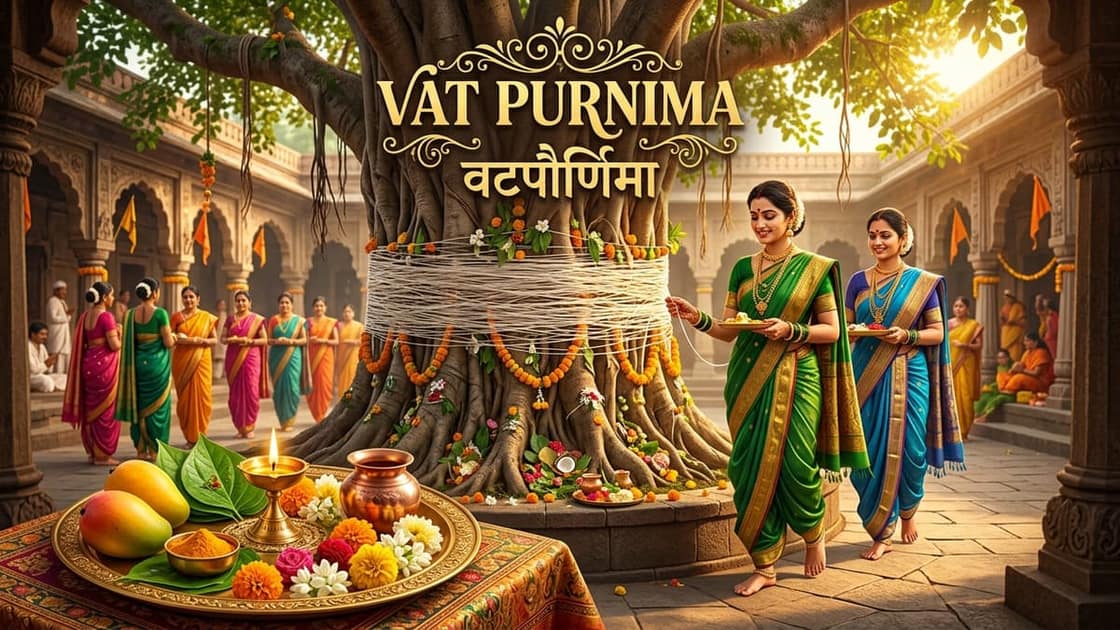
Vat Purnima is one of the most culturally cherished and spiritually uplifting festivals celebrated across Maharashtra. Deeply woven into the fabric of Maharashtrian heritage, Vat Purnima brings families, neighbors, and entire communities together in joyful devotion and festive harmony. From the crack of dawn, households across Maharashtra prepare for Vat Purnima with sacred enthusiasm. Entrances of homes are scrubbed clean, framed with vibrant torans of fresh marigolds and mango leaves, and adorned with elaborate Rangoli patterns created using bright natural powders. Women dress in traditional Maharashtrian attire, such as elegant Paithani or Nauvari sarees, while men wear traditional Kurta-Pyjamas or Dhotis. The atmosphere during Vat Purnima in Maharashtrian households is filled with divine warmth and fragrant incense. Families gather around the home altar for sacred Pujan, offering fresh flowers, sandalwood paste, lighted clay lamps (Diyas), and traditional sweet Naivedya. Beyond religious observance, Vat Purnima is a time of heartfelt hospitality, where relatives and neighbors visit each other's homes to exchange blessings, share homemade culinary delicacies, and pass down ancient customs to the younger generation.

Rath Yatra
रथयात्रा २०२६
Rath Yatra is one of the most culturally cherished and spiritually uplifting festivals celebrated across Maharashtra. Deeply woven into the fabric of Maharashtrian heritage, Rath Yatra brings families, neighbors, and entire communities together in joyful devotion and festive harmony. From the crack of dawn, households across Maharashtra prepare for Rath Yatra with sacred enthusiasm. Entrances of homes are scrubbed clean, framed with vibrant torans of fresh marigolds and mango leaves, and adorned with elaborate Rangoli patterns created using bright natural powders. Women dress in traditional Maharashtrian attire, such as elegant Paithani or Nauvari sarees, while men wear traditional Kurta-Pyjamas or Dhotis. The atmosphere during Rath Yatra in Maharashtrian households is filled with divine warmth and fragrant incense. Families gather around the home altar for sacred Pujan, offering fresh flowers, sandalwood paste, lighted clay lamps (Diyas), and traditional sweet Naivedya. Beyond religious observance, Rath Yatra is a time of heartfelt hospitality, where relatives and neighbors visit each other's homes to exchange blessings, share homemade culinary delicacies, and pass down ancient customs to the younger generation.
Guru Purnima
गुरु पौर्णिमा २०२६
Guru Purnima is one of the most culturally cherished and spiritually uplifting festivals celebrated across Maharashtra. Deeply woven into the fabric of Maharashtrian heritage, Guru Purnima brings families, neighbors, and entire communities together in joyful devotion and festive harmony. From the crack of dawn, households across Maharashtra prepare for Guru Purnima with sacred enthusiasm. Entrances of homes are scrubbed clean, framed with vibrant torans of fresh marigolds and mango leaves, and adorned with elaborate Rangoli patterns created using bright natural powders. Women dress in traditional Maharashtrian attire, such as elegant Paithani or Nauvari sarees, while men wear traditional Kurta-Pyjamas or Dhotis. The atmosphere during Guru Purnima in Maharashtrian households is filled with divine warmth and fragrant incense. Families gather around the home altar for sacred Pujan, offering fresh flowers, sandalwood paste, lighted clay lamps (Diyas), and traditional sweet Naivedya. Beyond religious observance, Guru Purnima is a time of heartfelt hospitality, where relatives and neighbors visit each other's homes to exchange blessings, share homemade culinary delicacies, and pass down ancient customs to the younger generation.
Raksha Bandhan
रक्षाबंधन २०२६
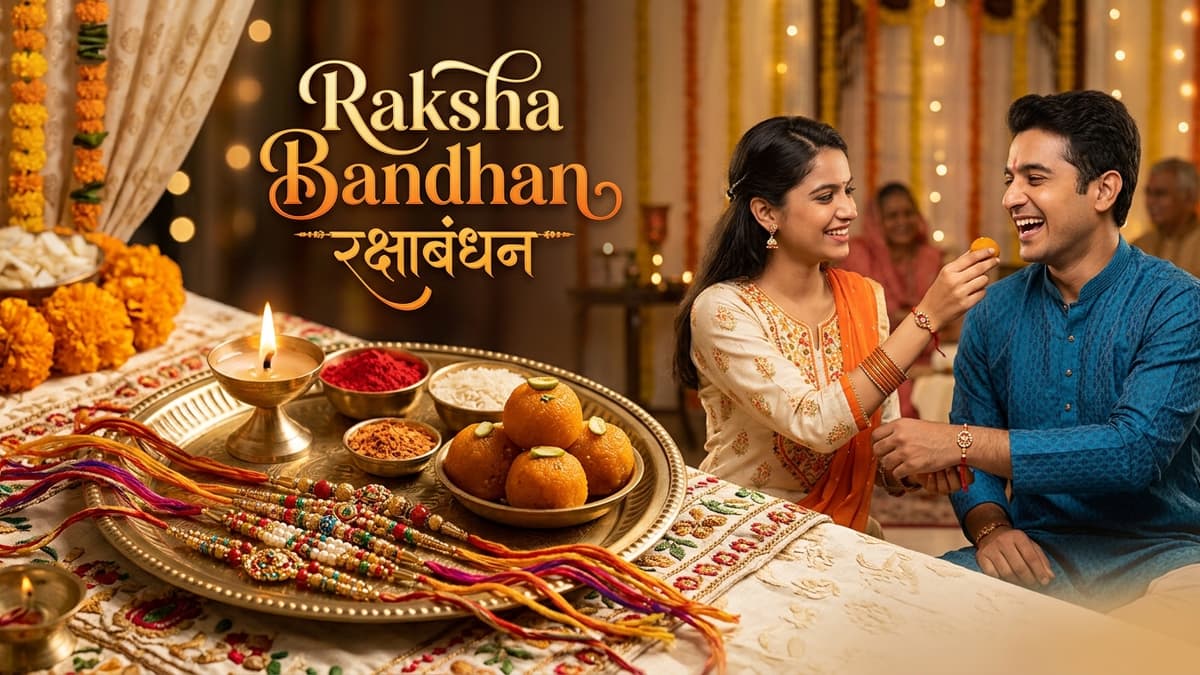
Raksha Bandhan is one of the most culturally cherished and spiritually uplifting festivals celebrated across Maharashtra. Deeply woven into the fabric of Maharashtrian heritage, Raksha Bandhan brings families, neighbors, and entire communities together in joyful devotion and festive harmony. From the crack of dawn, households across Maharashtra prepare for Raksha Bandhan with sacred enthusiasm. Entrances of homes are scrubbed clean, framed with vibrant torans of fresh marigolds and mango leaves, and adorned with elaborate Rangoli patterns created using bright natural powders. Women dress in traditional Maharashtrian attire, such as elegant Paithani or Nauvari sarees, while men wear traditional Kurta-Pyjamas or Dhotis. The atmosphere during Raksha Bandhan in Maharashtrian households is filled with divine warmth and fragrant incense. Families gather around the home altar for sacred Pujan, offering fresh flowers, sandalwood paste, lighted clay lamps (Diyas), and traditional sweet Naivedya. Beyond religious observance, Raksha Bandhan is a time of heartfelt hospitality, where relatives and neighbors visit each other's homes to exchange blessings, share homemade culinary delicacies, and pass down ancient customs to the younger generation.
Narali Purnima
नारळी पौर्णिमा
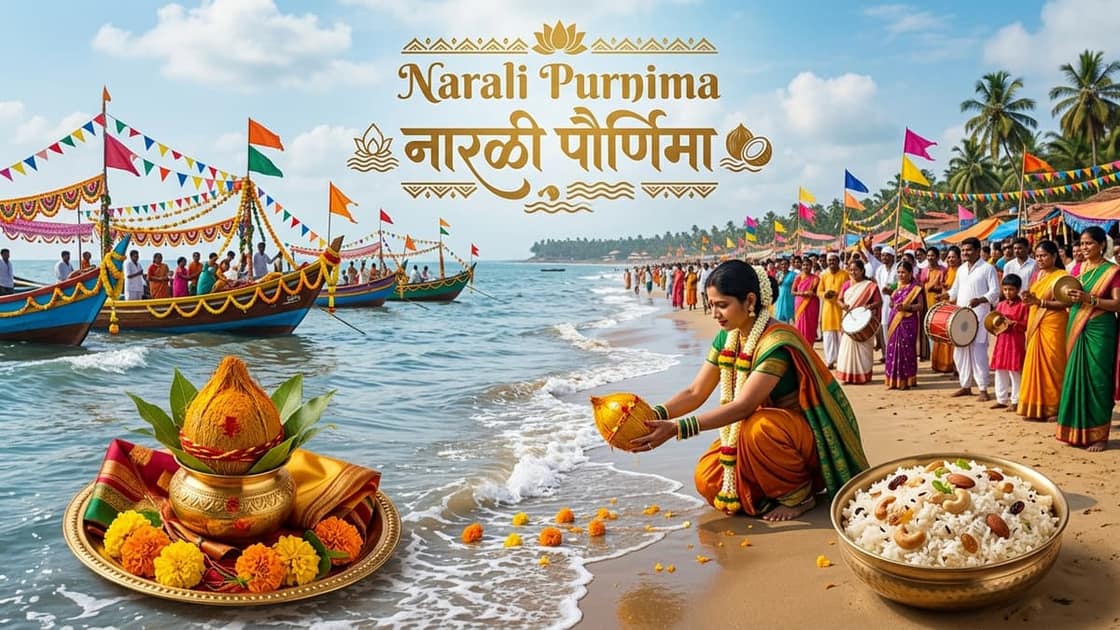
Narali Purnima is one of the most culturally cherished and spiritually uplifting festivals celebrated across Maharashtra. Deeply woven into the fabric of Maharashtrian heritage, Narali Purnima brings families, neighbors, and entire communities together in joyful devotion and festive harmony. From the crack of dawn, households across Maharashtra prepare for Narali Purnima with sacred enthusiasm. Entrances of homes are scrubbed clean, framed with vibrant torans of fresh marigolds and mango leaves, and adorned with elaborate Rangoli patterns created using bright natural powders. Women dress in traditional Maharashtrian attire, such as elegant Paithani or Nauvari sarees, while men wear traditional Kurta-Pyjamas or Dhotis. The atmosphere during Narali Purnima in Maharashtrian households is filled with divine warmth and fragrant incense. Families gather around the home altar for sacred Pujan, offering fresh flowers, sandalwood paste, lighted clay lamps (Diyas), and traditional sweet Naivedya. Beyond religious observance, Narali Purnima is a time of heartfelt hospitality, where relatives and neighbors visit each other's homes to exchange blessings, share homemade culinary delicacies, and pass down ancient customs to the younger generation.
Nag Panchami
नागपंचमी २०२६
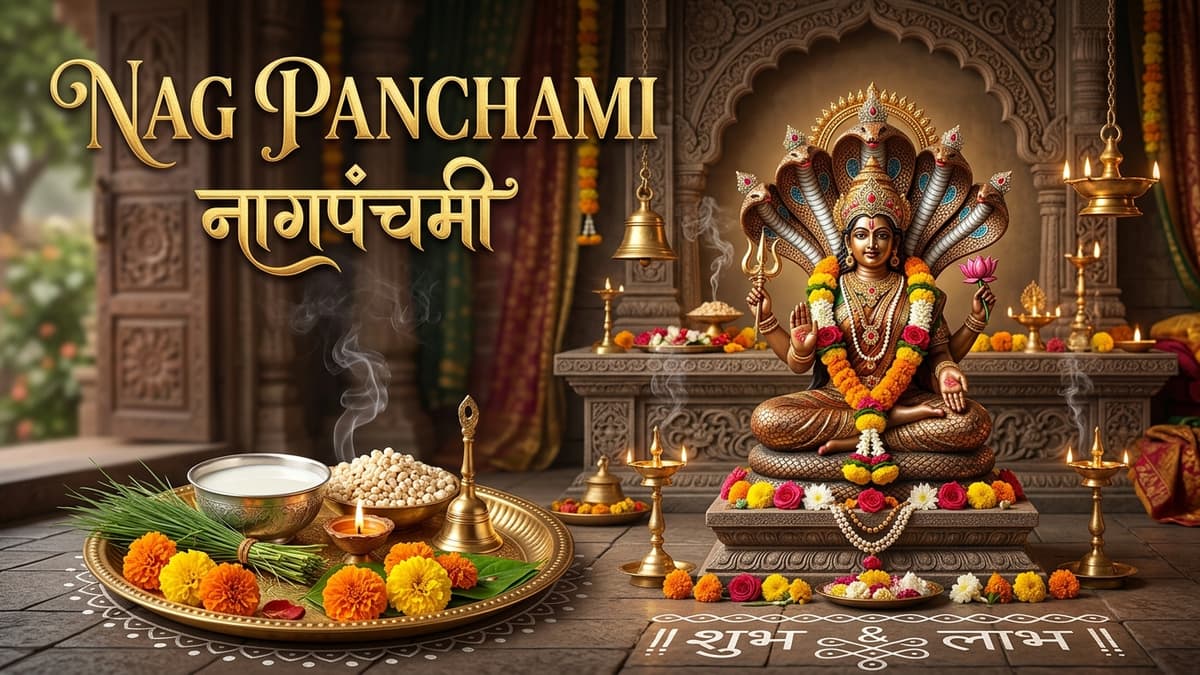
Nag Panchami is one of the most culturally cherished and spiritually uplifting festivals celebrated across Maharashtra. Deeply woven into the fabric of Maharashtrian heritage, Nag Panchami brings families, neighbors, and entire communities together in joyful devotion and festive harmony. From the crack of dawn, households across Maharashtra prepare for Nag Panchami with sacred enthusiasm. Entrances of homes are scrubbed clean, framed with vibrant torans of fresh marigolds and mango leaves, and adorned with elaborate Rangoli patterns created using bright natural powders. Women dress in traditional Maharashtrian attire, such as elegant Paithani or Nauvari sarees, while men wear traditional Kurta-Pyjamas or Dhotis. The atmosphere during Nag Panchami in Maharashtrian households is filled with divine warmth and fragrant incense. Families gather around the home altar for sacred Pujan, offering fresh flowers, sandalwood paste, lighted clay lamps (Diyas), and traditional sweet Naivedya. Beyond religious observance, Nag Panchami is a time of heartfelt hospitality, where relatives and neighbors visit each other's homes to exchange blessings, share homemade culinary delicacies, and pass down ancient customs to the younger generation.
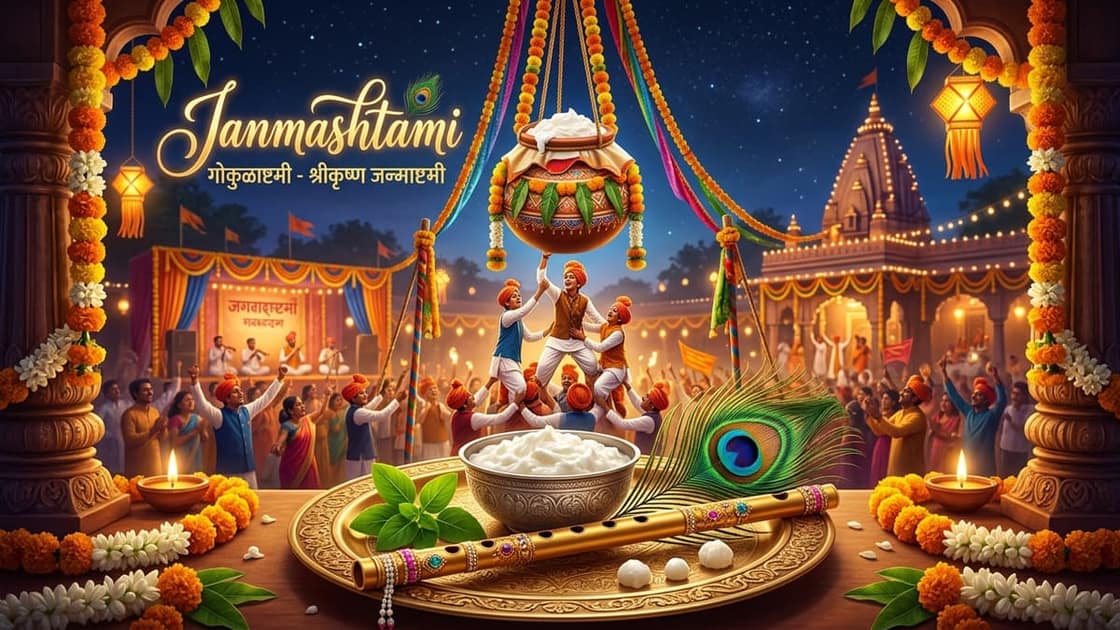
Janmashtami
गोकुळाष्टमी (कृष्ण जन्माष्टमी) २०२६
Janmashtami is one of the most culturally cherished and spiritually uplifting festivals celebrated across Maharashtra. Deeply woven into the fabric of Maharashtrian heritage, Janmashtami brings families, neighbors, and entire communities together in joyful devotion and festive harmony. From the crack of dawn, households across Maharashtra prepare for Janmashtami with sacred enthusiasm. Entrances of homes are scrubbed clean, framed with vibrant torans of fresh marigolds and mango leaves, and adorned with elaborate Rangoli patterns created using bright natural powders. Women dress in traditional Maharashtrian attire, such as elegant Paithani or Nauvari sarees, while men wear traditional Kurta-Pyjamas or Dhotis. The atmosphere during Janmashtami in Maharashtrian households is filled with divine warmth and fragrant incense. Families gather around the home altar for sacred Pujan, offering fresh flowers, sandalwood paste, lighted clay lamps (Diyas), and traditional sweet Naivedya. Beyond religious observance, Janmashtami is a time of heartfelt hospitality, where relatives and neighbors visit each other's homes to exchange blessings, share homemade culinary delicacies, and pass down ancient customs to the younger generation.
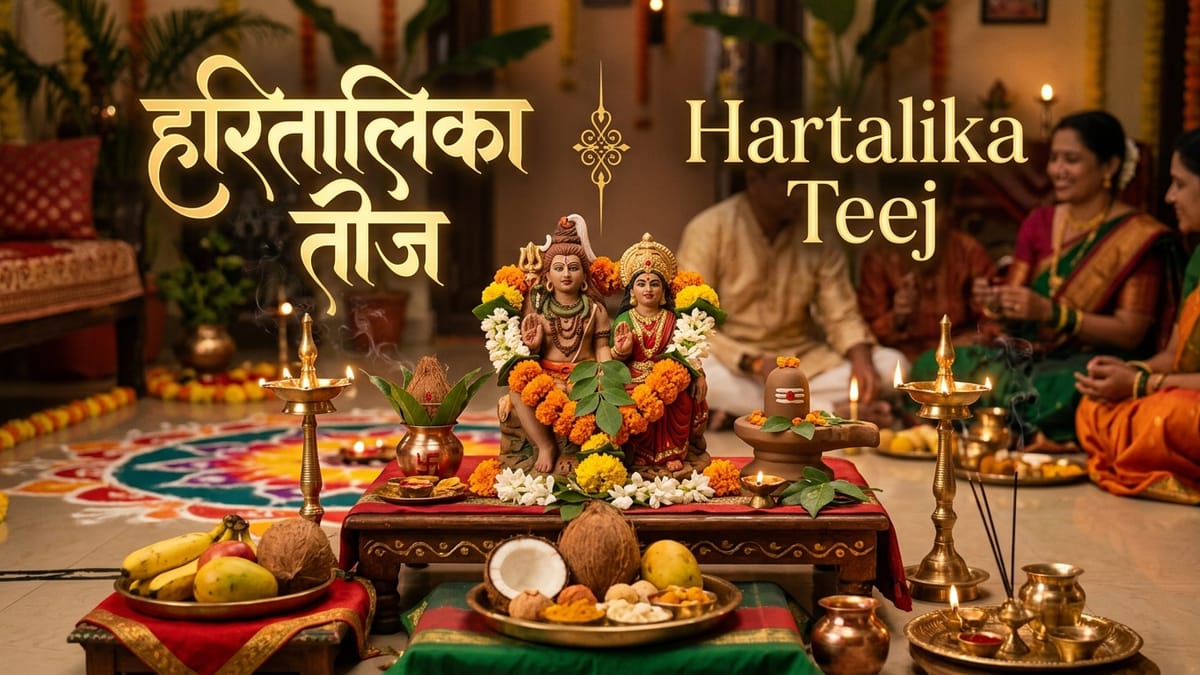
Hartalika Teej
हरितालिका तीज
Hartalika Teej is one of the most culturally cherished and spiritually uplifting festivals celebrated across Maharashtra. Deeply woven into the fabric of Maharashtrian heritage, Hartalika Teej brings families, neighbors, and entire communities together in joyful devotion and festive harmony. From the crack of dawn, households across Maharashtra prepare for Hartalika Teej with sacred enthusiasm. Entrances of homes are scrubbed clean, framed with vibrant torans of fresh marigolds and mango leaves, and adorned with elaborate Rangoli patterns created using bright natural powders. Women dress in traditional Maharashtrian attire, such as elegant Paithani or Nauvari sarees, while men wear traditional Kurta-Pyjamas or Dhotis. The atmosphere during Hartalika Teej in Maharashtrian households is filled with divine warmth and fragrant incense. Families gather around the home altar for sacred Pujan, offering fresh flowers, sandalwood paste, lighted clay lamps (Diyas), and traditional sweet Naivedya. Beyond religious observance, Hartalika Teej is a time of heartfelt hospitality, where relatives and neighbors visit each other's homes to exchange blessings, share homemade culinary delicacies, and pass down ancient customs to the younger generation.
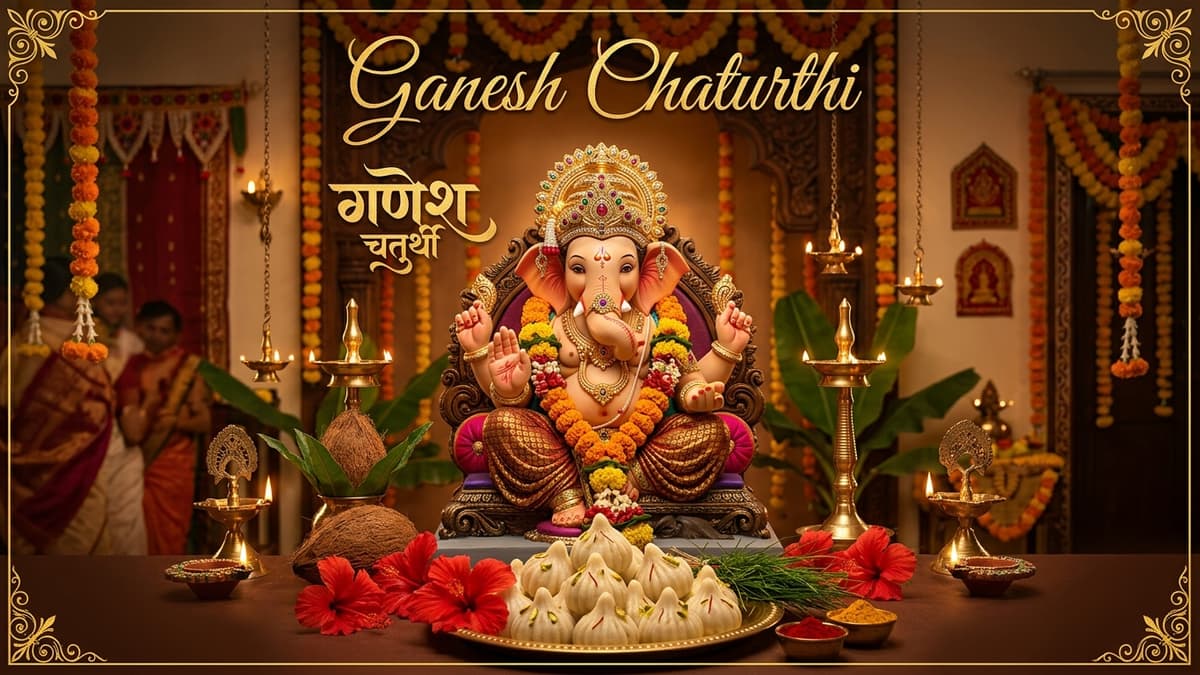
Ganesh Chaturthi
गणेश चतुर्थी २०२६
Ganesh Chaturthi (Ganeshotsav) is the most celebrated cultural festival of Maharashtra. Commencing on Bhadrapada Shukla Chaturthi, the festival transforms the entire state into an ocean of devotion, music, lights, and community fellowship as Lord Ganesha — the revered remover of obstacles (Vighnaharta) and deity of wisdom — is welcomed into millions of households and vibrant public Sarvajanik Pandals. For ten days, the air in Maharashtra reverberates with the thunderous beats of Dhol-Tasha pathaks, traditional brass Aarti bells, and ecstatic chants of **'गणपती बाप्पा मोरया, पुढच्या वर्षी लवकर या!' (Ganpati Bappa Morya, Pudhchya Varshi Lavkar Ya!)**. From world-famous Sarvajanik mandals in Mumbai such as *Lalbaugcha Raja*, *GSB Seva Mandal*, and *Khetwadi cha Raja*, to Pune's historic *Manacha Pahila Ganpati (Kasba Ganpati)*, millions of pilgrims stand in long queues to seek Bappa's blessings. Inside homes, altars are adorned with floral garlands, Durva grass, and red Hibiscus flowers. Maharashtrian families prepare batches of Bappa's supreme delicacy — **Ukdiche Modak** (steamed rice-flour dumplings filled with fresh coconut, jaggery, cardamom, and nutmeg, drizzled with hot ghee). Ganeshotsav is not just a religious event; it is an unmatched artistic showcase of eco-friendly clay idol sculpting, thematic pandal decorations, and selfless public service.
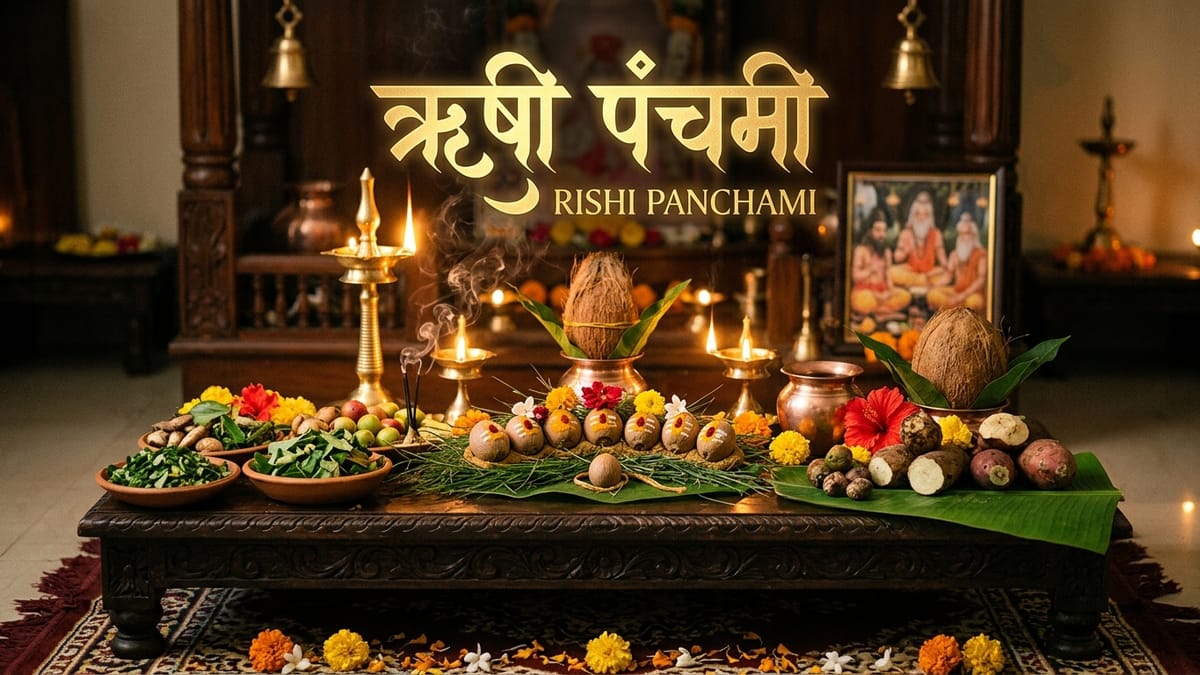
Rishi Panchami
ऋषी पंचमी
Rishi Panchami is one of the most culturally cherished and spiritually uplifting festivals celebrated across Maharashtra. Deeply woven into the fabric of Maharashtrian heritage, Rishi Panchami brings families, neighbors, and entire communities together in joyful devotion and festive harmony. From the crack of dawn, households across Maharashtra prepare for Rishi Panchami with sacred enthusiasm. Entrances of homes are scrubbed clean, framed with vibrant torans of fresh marigolds and mango leaves, and adorned with elaborate Rangoli patterns created using bright natural powders. Women dress in traditional Maharashtrian attire, such as elegant Paithani or Nauvari sarees, while men wear traditional Kurta-Pyjamas or Dhotis. The atmosphere during Rishi Panchami in Maharashtrian households is filled with divine warmth and fragrant incense. Families gather around the home altar for sacred Pujan, offering fresh flowers, sandalwood paste, lighted clay lamps (Diyas), and traditional sweet Naivedya. Beyond religious observance, Rishi Panchami is a time of heartfelt hospitality, where relatives and neighbors visit each other's homes to exchange blessings, share homemade culinary delicacies, and pass down ancient customs to the younger generation.
Anant Chaturdashi
अनंत चतुर्दशी
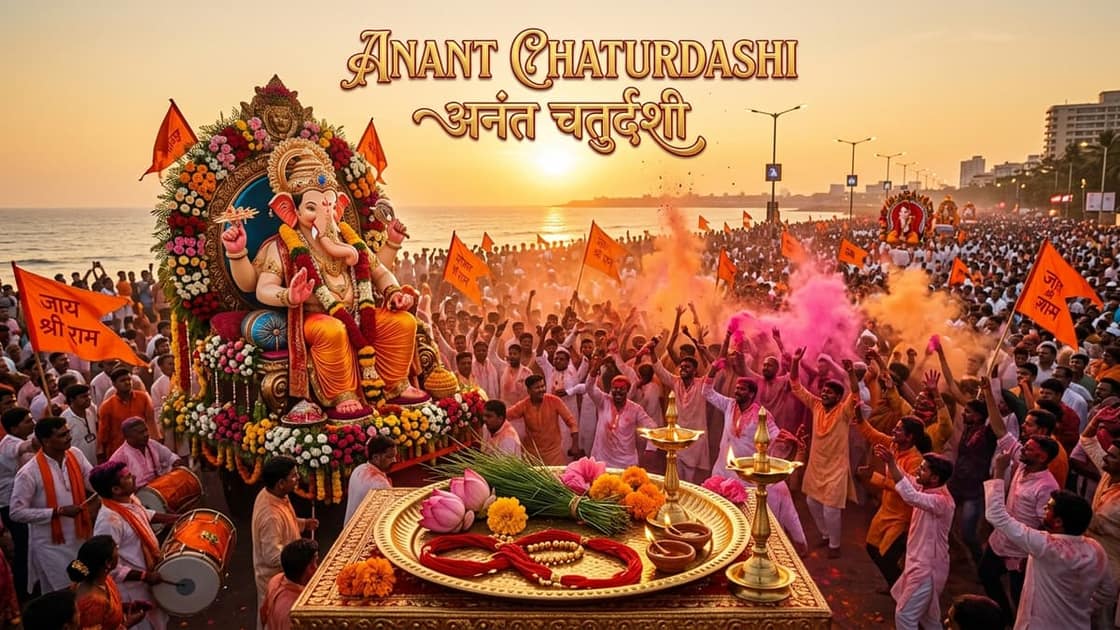
Anant Chaturdashi is one of the most culturally cherished and spiritually uplifting festivals celebrated across Maharashtra. Deeply woven into the fabric of Maharashtrian heritage, Anant Chaturdashi brings families, neighbors, and entire communities together in joyful devotion and festive harmony. From the crack of dawn, households across Maharashtra prepare for Anant Chaturdashi with sacred enthusiasm. Entrances of homes are scrubbed clean, framed with vibrant torans of fresh marigolds and mango leaves, and adorned with elaborate Rangoli patterns created using bright natural powders. Women dress in traditional Maharashtrian attire, such as elegant Paithani or Nauvari sarees, while men wear traditional Kurta-Pyjamas or Dhotis. The atmosphere during Anant Chaturdashi in Maharashtrian households is filled with divine warmth and fragrant incense. Families gather around the home altar for sacred Pujan, offering fresh flowers, sandalwood paste, lighted clay lamps (Diyas), and traditional sweet Naivedya. Beyond religious observance, Anant Chaturdashi is a time of heartfelt hospitality, where relatives and neighbors visit each other's homes to exchange blessings, share homemade culinary delicacies, and pass down ancient customs to the younger generation.
Pitru Paksha
पितृ पक्ष
Pitru Paksha is one of the most culturally cherished and spiritually uplifting festivals celebrated across Maharashtra. Deeply woven into the fabric of Maharashtrian heritage, Pitru Paksha brings families, neighbors, and entire communities together in joyful devotion and festive harmony. From the crack of dawn, households across Maharashtra prepare for Pitru Paksha with sacred enthusiasm. Entrances of homes are scrubbed clean, framed with vibrant torans of fresh marigolds and mango leaves, and adorned with elaborate Rangoli patterns created using bright natural powders. Women dress in traditional Maharashtrian attire, such as elegant Paithani or Nauvari sarees, while men wear traditional Kurta-Pyjamas or Dhotis. The atmosphere during Pitru Paksha in Maharashtrian households is filled with divine warmth and fragrant incense. Families gather around the home altar for sacred Pujan, offering fresh flowers, sandalwood paste, lighted clay lamps (Diyas), and traditional sweet Naivedya. Beyond religious observance, Pitru Paksha is a time of heartfelt hospitality, where relatives and neighbors visit each other's homes to exchange blessings, share homemade culinary delicacies, and pass down ancient customs to the younger generation.
Navratri
नवरात्री
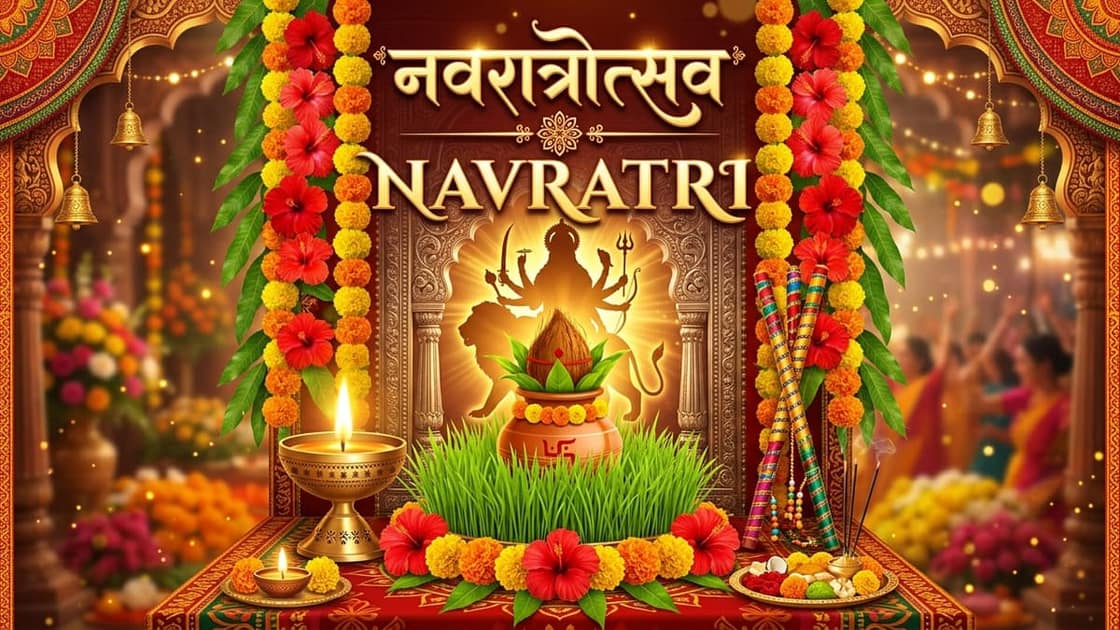
Sharad Navratri (शारदीय नवरात्रौत्सव) is celebrated across Maharashtra as nine divine nights of supreme devotion to the Cosmic Mother (**Adishakti Durga**). Beginning on Ashwin Shukla Pratipada, the festival awakens Maharashtra's soul to the sacred feminine energy of its celebrated **Sade-Teen Shaktipithas (साडेतीन शक्तिपीठे)**: **Tuljapur** (Tulja Bhavani, the Kulswamini of Chhatrapati Shivaji Maharaj), **Kolhapur** (Mahalakshmi / Ambabai), **Mahur Gad** (Renuka Mata), and the half-seat at **Vani** (Saptashrungi Mata in Nashik). The heartbeat of Navratri in every Marathi household is the solemn ritual of **Ghatasthapana (घटस्थापना)** performed on Pratipada morning. On a square bed of sanctified black agricultural soil (*Kali Matee*), seven sacred grains (**Saptadhanya**: wheat, barley, sesame, green gram, chickpeas, mustard, and rice) are sown. At the center sits a brass or earthen pot (*Kalash*) filled with water, mango leaves, betel nuts, and a coconut adorned with kumkum. Suspended directly above the Kalash hangs a woven flower garland (**Mala**), renewed every single day for nine consecutive days with fresh blooms — from delicate mogra and fragrant sonchafa to bright yellow zendu. Beside the Ghat burns the **Akhand Nanda Deep (अखंड नंदादीप)**, an unbroken brass oil lamp tended day and night with devotion. Unique to Maharashtra is the cultural celebration of **Bhondla (भोंडला)** or **Hadga (हाडगा)**. In the evenings, young girls and women gather around an image of Lord Indra's celestial elephant (*Airavata*) drawn in chalk powder or silver. Clasping hands in a circle, they dance and sing humorous, rhythmic folk songs passed down through oral tradition (*'ऐलमा पैलमा गणेश देवा...'*, *'कारल्याचं वेल लावं ग सुने...'*), concluding with a lively game of guessing the mystery snack (**Khirapat**) concealed under a cloth napkin.
Durga Ashtami
दुर्गा अष्टमी
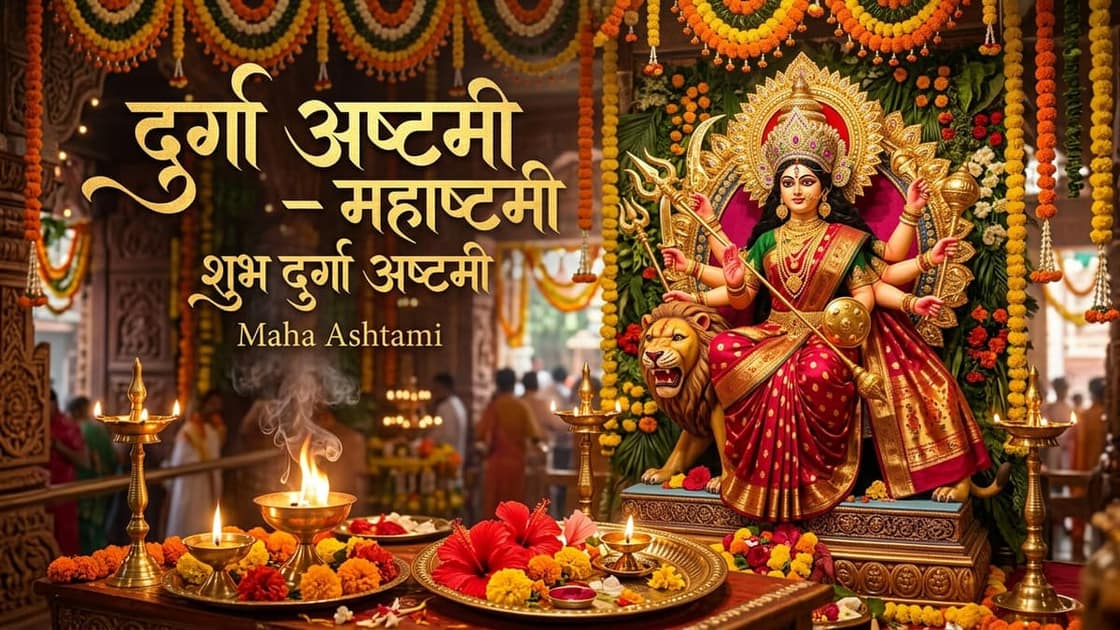
Durga Ashtami (दुर्गाष्टमी / महाष्टमी), falling on Ashwin Shukla Ashtami, is the most spiritually intense and powerful day of the nine-day Navratri festival across Maharashtra. Revered as the day when Goddess Mahagauri — the radiant, white-clad manifestation of Adishakti representing absolute purity, peace, and grace — is worshipped, it also commemorates the fierce emergence of Goddess Chamunda from Mother Durga's brow to vanquish demons Chanda and Munda. In Maharashtrian households and shrines, the day begins with **Gauri Pujan** and the elaborate sacred fire sacrifice known as **Navachandi Havan (नवचंडी होम / हवन)**. Pure cow ghee, medicinal herbs, dried samidha twigs, dry coconut (*Kopara*), and sacred Ahutis are offered into the blazing fire with recitations of the Durga Saptashati. Simultaneously, households conduct **Kanya Pujan (कुमारिका पूजन)**: nine young prepubescent girls (representing the nine forms of Durga) and one young boy (representing Batuk Bhairava) are invited into the home. Their feet are lovingly washed in brass basins with rose water, sanctified kumkum and chandan are applied to their foreheads, and they are served a traditional feast of black chickpeas (**Kala Chana**), fluffy puris, sweet Suji halwa, and crisp banana chips, accompanied by gifts of red bangles, ribbon, and coins. The ultimate peak of Durga Ashtami is **Sandhi Puja (संधि पूजा)** — the precise 48-minute astronomical juncture connecting the final 24 minutes of Ashtami tithi and the first 24 minutes of Navami tithi, believed to be the exact cosmic moment when Goddess Chamunda appeared.
Maha Navami
महानवमी
Maha Navami is one of the most culturally cherished and spiritually uplifting festivals celebrated across Maharashtra. Deeply woven into the fabric of Maharashtrian heritage, Maha Navami brings families, neighbors, and entire communities together in joyful devotion and festive harmony. From the crack of dawn, households across Maharashtra prepare for Maha Navami with sacred enthusiasm. Entrances of homes are scrubbed clean, framed with vibrant torans of fresh marigolds and mango leaves, and adorned with elaborate Rangoli patterns created using bright natural powders. Women dress in traditional Maharashtrian attire, such as elegant Paithani or Nauvari sarees, while men wear traditional Kurta-Pyjamas or Dhotis. The atmosphere during Maha Navami in Maharashtrian households is filled with divine warmth and fragrant incense. Families gather around the home altar for sacred Pujan, offering fresh flowers, sandalwood paste, lighted clay lamps (Diyas), and traditional sweet Naivedya. Beyond religious observance, Maha Navami is a time of heartfelt hospitality, where relatives and neighbors visit each other's homes to exchange blessings, share homemade culinary delicacies, and pass down ancient customs to the younger generation.
Dussehra (Vijayadashami)
दसरा / विजयादशमी
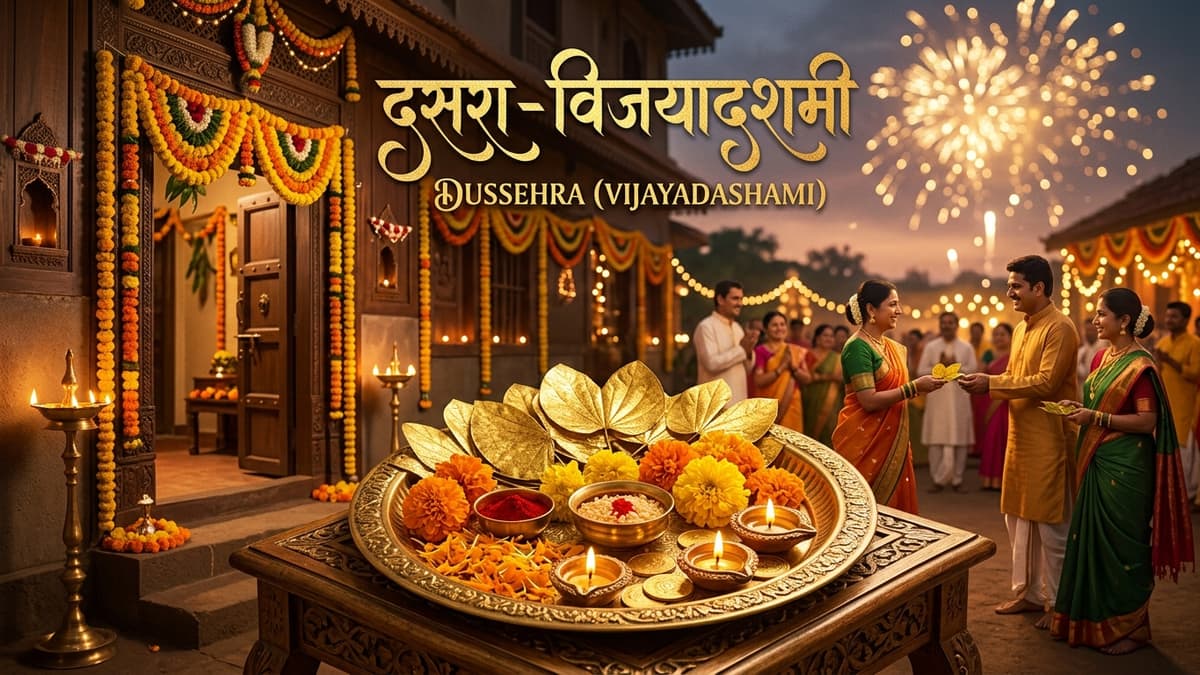
Dussehra (दसरा / विजयादशमी), falling on Ashwin Shukla Dashami, is celebrated with unmatched regal grandeur, martial pride, and emotional warmth throughout Maharashtra. Revered as one of Maharashtra's paramount **Sade-Teen Muhurtas (साडेतीन मुहूर्त)**, this supreme day of victory commemorates two legendary triumphs: Lord Rama's vanquishing of the ten-headed demon king Ravana, and Goddess Durga's slaying of the buffalo demon Mahishasura after a furious nine-day battle. Across Maharashtra, the day has an unmistakable sensory atmosphere: doorways are adorned with vibrant golden-orange **Zendu (Marigold)** torans and mango leaves, vehicles and home equipment glisten with red Chandan and garlands for **Ayudha Puja (शस्त्र / अवजार पूजा)**, and kitchens aroma with pure ghee, hot dal, and sweet **Puran Poli** or **Shrikhand Puri**. As twilight descends on Dussehra evening, the unique Maharashtrian community ritual of **Simollanghan (सीमोल्लंघन)** and **Apta Pujan (आपट्याची पूजा)** takes center stage. Families dress in their finest Paithani sarees and festive Kurtas to visit local Shami and Apta (*Bauhinia racemosa*) trees. Devotees reverently touch the tree branches, pray for fortitude, collect the tender heart-shaped green leaves, and visit friends, relatives, and village elders. Presenting these fresh leaves as symbolic gold (*'सोनं घ्या आणि सोन्यासारखे रहा!'* — 'Accept this gold and remain precious as gold'), younger family members touch the feet of their elders to receive blessings (*Aashirwad*), dissolving old grudges in an embrace of goodwill.
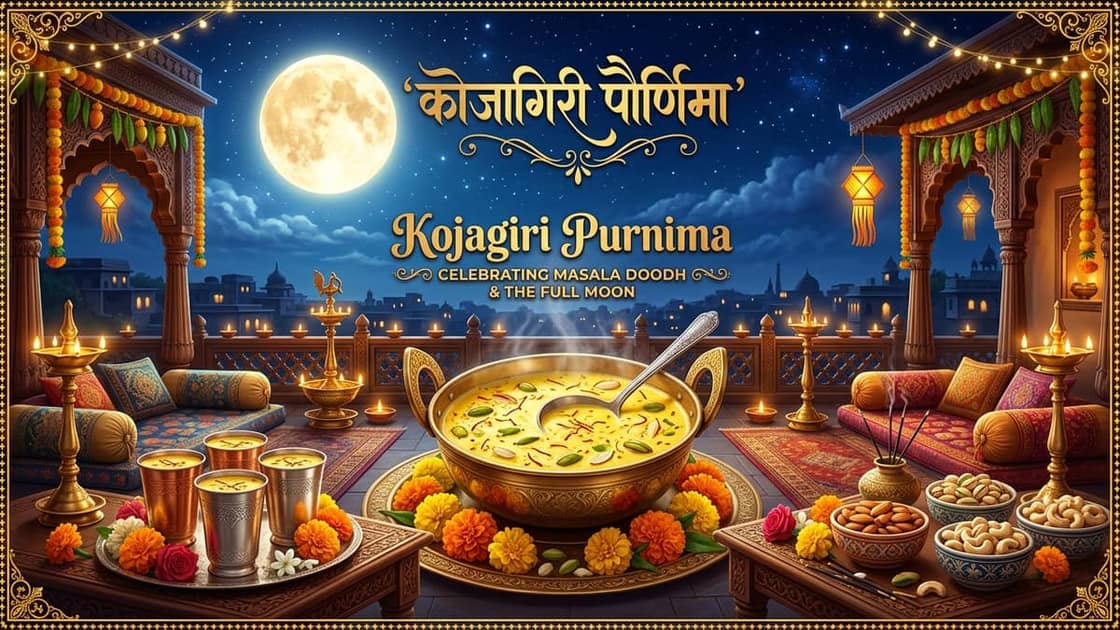
Kojagiri Purnima
कोजागिरी पौर्णिमा
Kojagiri Purnima (also celebrated as Sharad Purnima or Ashwin Purnima) is one of the most enchanting and spiritually potent full moon nights in Maharashtra. Falling in the auspicious month of Ashwin, this night marks the transition into the golden autumn (Sharad Ritu), when the moon shines closest to the Earth with all sixteen astrological phases (Solah Kalas) fully illuminated. In Maharashtrian tradition, the centerpiece of the festival is the sacred night vigil (**Jagarana**) and the brewing of authentic **Kojagiri Masala Doodh** (rich saffron and dry-fruit infused milk). Families gather on terraces, balconies, and open courtyards under the silver moonlight. The vessel of boiling hot sweetened milk is placed directly under the celestial moonlight for several hours so that the moon's curative rays (revered in Ayurveda as divine nectar or *Amrit*) infuse the drink. Before consuming, family members gaze into the vessel to admire the moon's direct reflection on the milk surface before offering it as Naivedya to Goddess Lakshmi and sharing it amongst loved ones. Kojagiri Purnima is also revered across Maharashtra as **Aswin Navanna Purnima** (harvest celebration). Farmers honor the newly harvested grains of paddy, pulses, and sugarcane, offering the fresh harvest to the deities in gratitude for seasonal abundance and agricultural prosperity.
Vasubaras
वसुबारस (गोवत्स द्वादशी) २०२६
Vasubaras (वसुबारस), also celebrated as Govatsa Dwadashi (गोवत्स द्वादशी), marks the ceremonial dawn of the Diwali festival across Maharashtra. Celebrated on the auspicious Ashwin Krishna Dwadashi, this heartfelt occasion is dedicated to expressing profound gratitude to Gau Mata (the holy cow) and her nursing calf (Vatsa). In traditional Maharashtrian agrarian life, the cow represents Kamadhenu — the celestial wish-fulfilling mother who sustains families with nourishing milk, enriches farm soil, and embodies unconditional gentleness. On this auspicious morning, courtyards in towns and villages throughout Maharashtra are swept immaculate, washed with cow dung water, and decorated with elaborate white rice flour and geru rangoli motifs of cow footprints and lotus buds. Married women and mothers observe a dedicated day-long fast, praying earnestly for the long life, sound health, and prosperity of their children. As dusk sets in during Pradosh Kaal, cows and calves are respectfully welcomed into home front yards or visited in local goshalas, where family members perform ceremonial Auchan, anoint their heads with vermilion and sandalwood paste, and garland them with fresh marigold flowers. Vasubaras also holds the spiritual distinction of inaugurating the lighting of Diwali lamps. As soon as Gau Pujan concludes, the very first clay oil lamp (पहिली पणती) of the Deepavali season is lit reverently outside the house facing south, signaling the dispelling of gloom and welcoming Goddess Lakshmi's divine grace into the home.
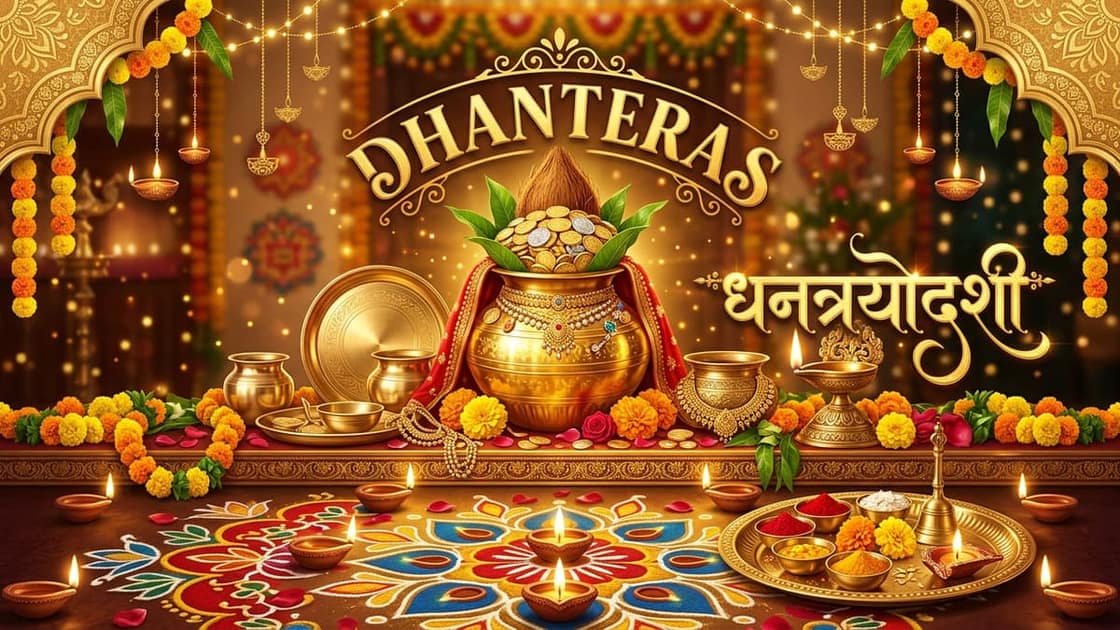
Dhanteras
धनत्रयोदशी २०२६
Dhanteras (celebrated across Maharashtra as **Dhanatrayodashi - धनत्रयोदशी**) marks the glorious official opening of the 5-day Diwali festive extravaganza. Occurring on the thirteenth lunar day (Trayodashi) of the dark fortnight (Krishna Paksha) in the sacred month of Kartik, Dhanteras brings celestial blessings of health, material prosperity, and spiritual liberation into homes. In Maharashtra, the festival unites two deeply revered divine celebrations: the worship of **Lord Dhanvantari** (the divine physician of the Gods and founder of Ayurveda) and the worship of **Goddess Mahalakshmi** and **Lord Kubera** (the celestial treasurer). Homes are illuminated with flickering earthen oil lamps (Panti), fresh marigold garlands (Zendu), and intricate powder Rangolis depicting the auspicious footprints of Goddess Lakshmi entering the house. Tradition mandates buying auspicious items on this day — particularly gold, silver coins, brass kitchenware, copper utensils, and dry coriander seeds (**Dhana / धणे**). In every Maharashtrian kitchen, the intoxicating aroma of freshly fried **Diwali Faral** (Chakli, Karanji, Besan Ladoo, and Chivda) fills the air, signaling the triumphant arrival of the Festival of Lights.
Diwali
दिवाळी २०२६
Diwali (Deepavali) in Maharashtra is an intoxicating five-day festival of light, warmth, culinary grandeur, and historical pride. Stretching from Dhanteras to Bhau Beej, Diwali turns every city, town, and rural hamlet into a glowing wonderland. Windows are illuminated with handcrafted **Akash Kandils** (sky lanterns), courtyards are blanketed in dazzling Rangoli carpet designs, and thousands of clay Diyas line doorways. A uniquely Maharashtrian Diwali tradition is the construction of mud forts (**Killa**) by children. Honoring Chhatrapati Shivaji Maharaj's legendary Maratha fortresses, kids spend weeks gathering mud, stones, and mustard seeds to build miniature hill forts, complete with miniature Maratha soldier figurines and saffron flags. Families gather before sunrise for **Abhyanga Snan** — a sacred ritual bath using warm water, fragrant oils, and herbal **Utane** scrub. Afterward, homes open their doors to relatives and neighbors to present the famed **Diwali Faral** platter, featuring homemade snacks like Chakli, Poha Chivda, Karanji, Anarse, Shankarpali, and Laddoos.
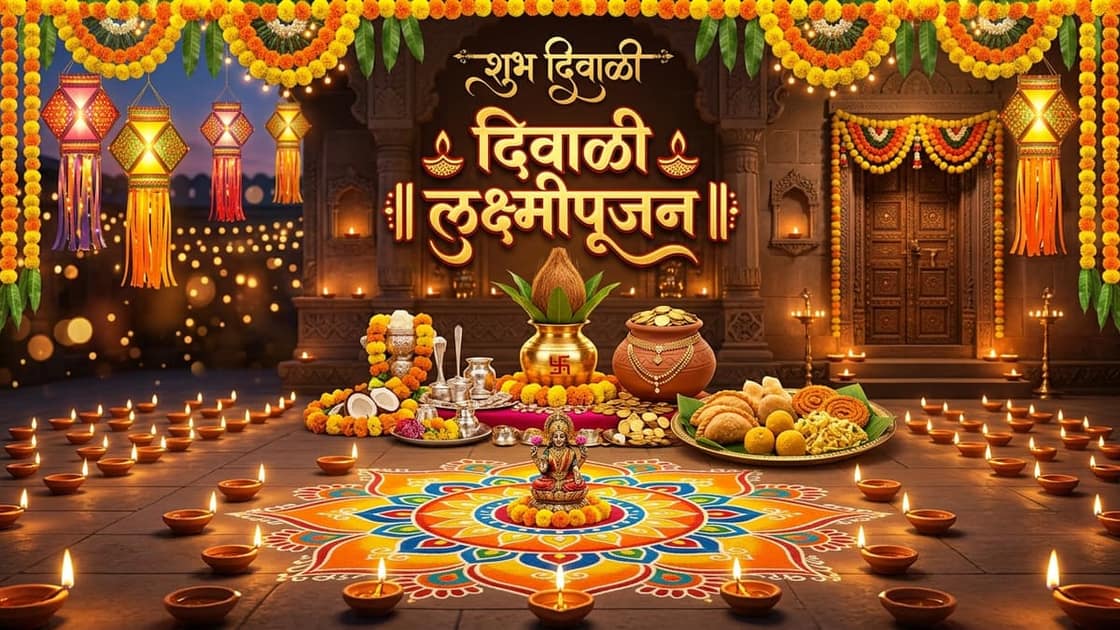
Diwali Laxmi Pujan
लक्ष्मीपूजन २०२६
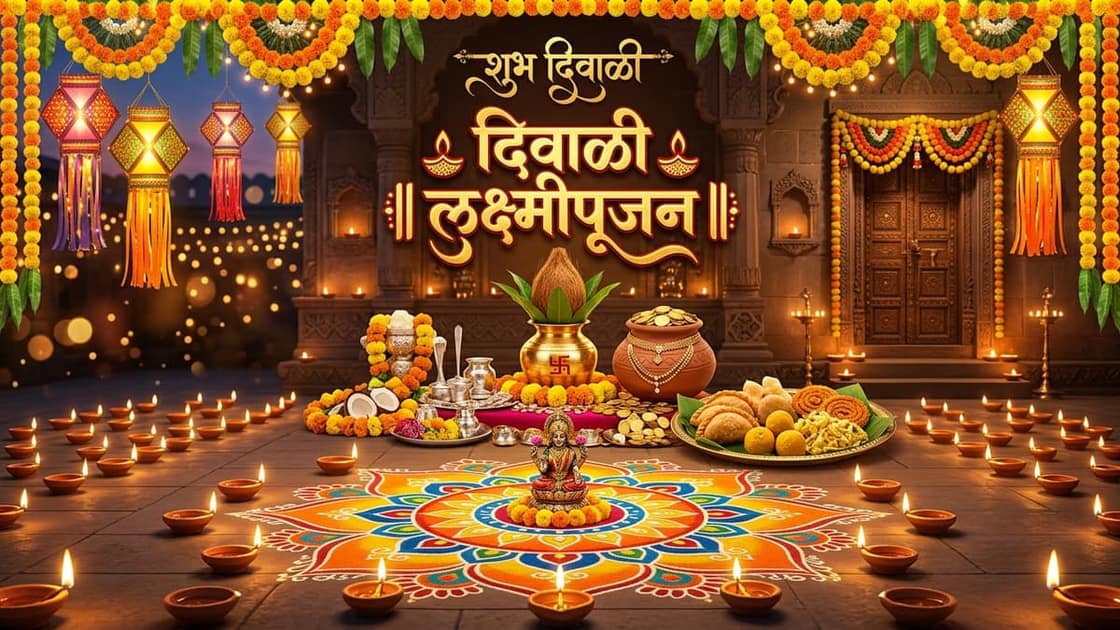
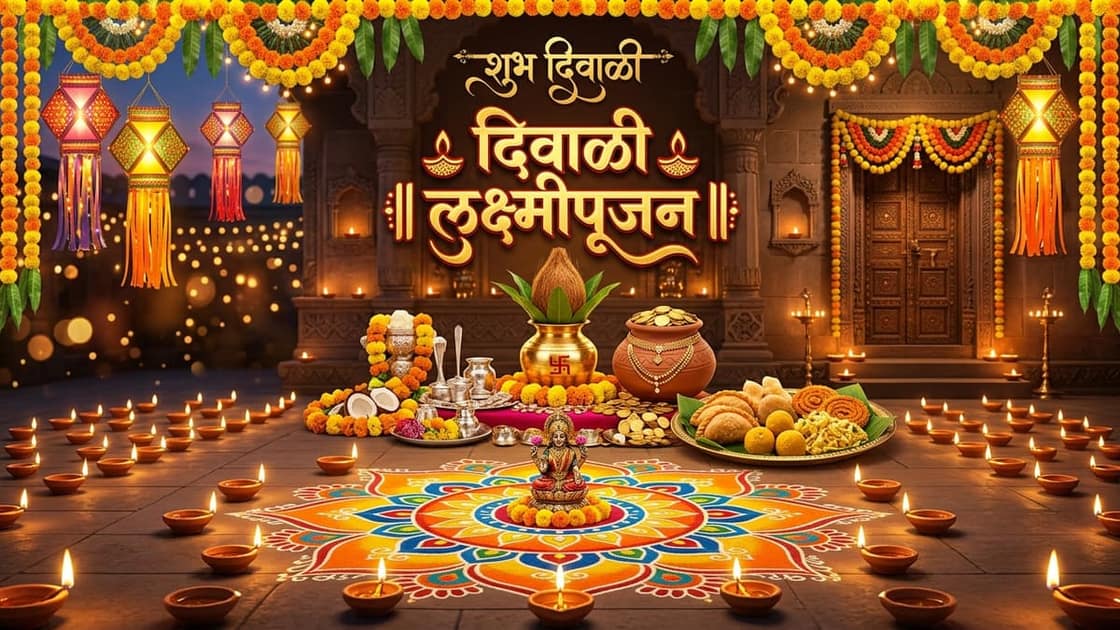
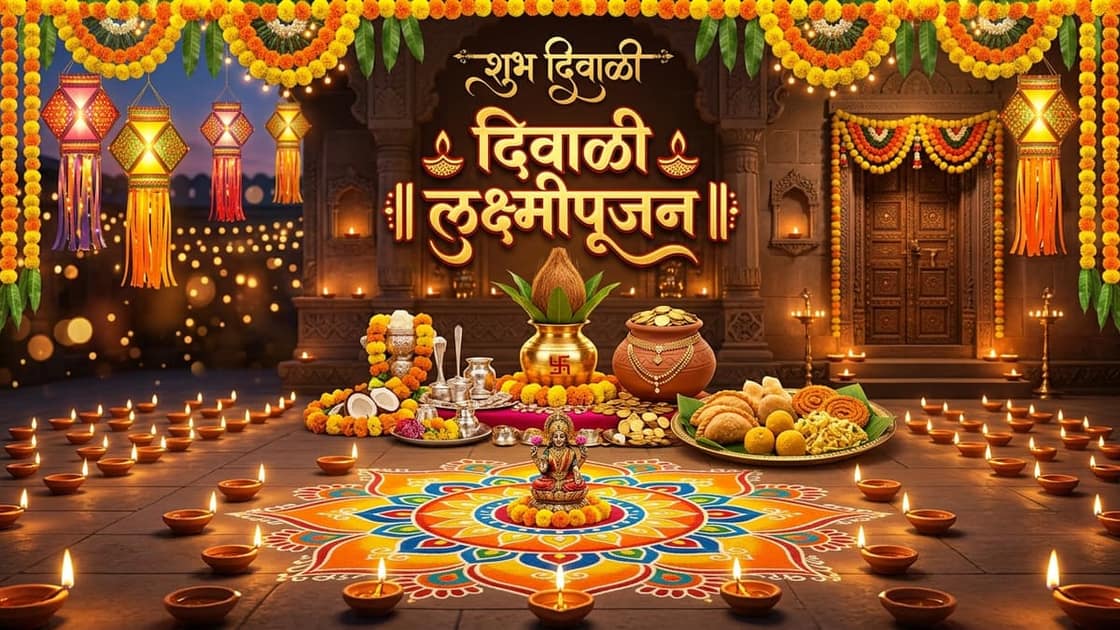
Diwali Laxmi Pujan (लक्ष्मी पूजन) is the grand spiritual pinnacle of the entire Diwali festival in Maharashtra. Celebrated on the moonless night (Amavasya) of the dark fortnight in the holy month of Kartik, this sacred evening transforms every Maharashtrian home and business establishment into a resplendent sanctuary of divine light, purity, and spiritual grace. Tradition dictates that on Kartik Amavasya night, **Goddess Mahalakshmi** — the consort of Lord Vishnu and the bestower of wealth, fortune, and righteousness — descends to Earth and visits households that are clean, radiant with light, and filled with peaceful devotion. In every corner of Maharashtra, doorways are adorned with glowing rows of earthen lamps (**Pantis**), skyward-facing paper lanterns (**Akashkandils**), and vibrant Rangolis illustrating the divine lotus and Goddess Lakshmi's holy footsteps entering the home. Alongside Goddess Lakshmi, devotees worship **Lord Ganesha** (the remover of obstacles), **Goddess Saraswati** (the deity of wisdom, arts, and intellect), and **Lord Kubera** (the celestial keeper of cosmic wealth). For merchants, traders, and corporate offices across Mumbai, Pune, and Nagpur, this evening is celebrated with **Chopda Pujan** — the consecration of new financial account books, registers, and computers with turmeric, kumkum, and auspicious swastika marks.
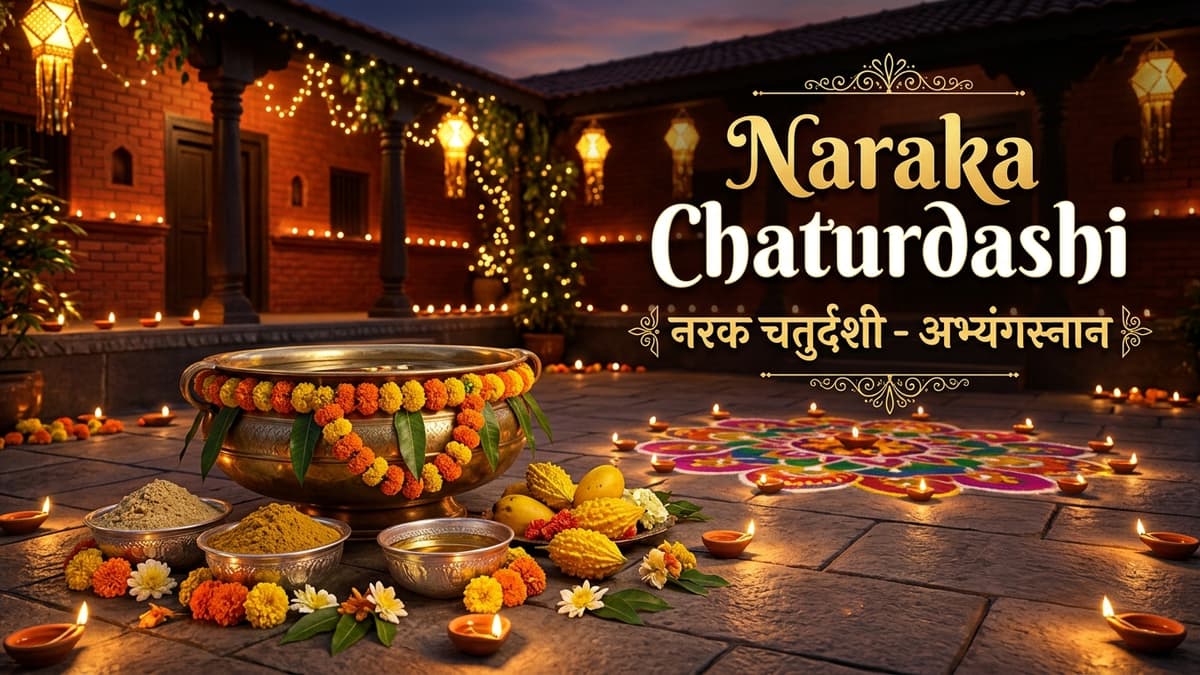
Naraka Chaturdashi
नरक चतुर्दशी
Naraka Chaturdashi (celebrated with immense cultural pride in Maharashtra as **Pahili Diwali - पहिली दिवाळी**) is the second and most sensory-rich day of the Diwali festival. Observed on the fourteenth day (Chaturdashi) of the dark fortnight in the month of Kartik, this day commemorates Lord Krishna's decisive triumph over the demon king Narakasura, liberating humanity and sixteen thousand captive souls from tyranny. In Maharashtra, the soul of Naraka Chaturdashi lies in the sacred pre-dawn ritual of **Abhyanga Snan (अभ्यंगस्नान)**. Long before sunrise, families wake up to the festive chill of early winter. Mothers and sisters massage family members with warm herbal oils and scented **Utane (उटणे)** — an aromatic Ayurvedic scrub made from sandalwood, vetiver, rose petals, and turmeric. Before bathing, each family member steps on a small bitter green melon called **Karit (कारीट)**, crushing it under their left foot to symbolize the destruction of inner demons, ego, and negativity. Following the purifying bath, family members dress in resplendent new festive garments, receive traditional Aarti (**Owalani**) from the women of the house, and sit together for the first grand feast of homemade **Diwali Faral** (freshly prepared Chaklis, sweet Karanjis, Besan Ladoos, and spicy Chivda). Balconies and courtyards are illuminated with glowing paper lanterns (**Akashkandil**) and strings of oil lamps (**Panti**).
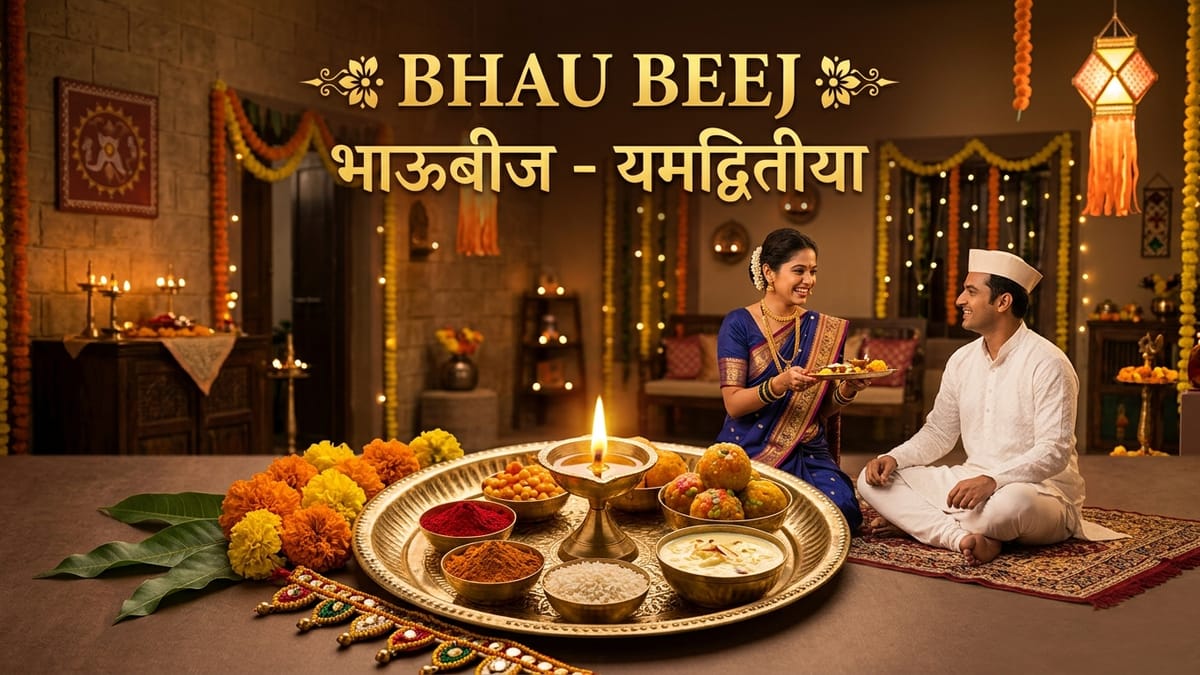
Bhau Beej
भाऊबीज २०२६
Bhau Beej (celebrated in Maharashtra as **भाऊबीज** and across ancient scriptures as **Yamadvitiya - यमद्वितीया**) is the heartwarming fifth and final day of the Diwali festival. Falling on the second day (Dwitiya) of the bright fortnight in the sacred month of Kartik, Bhau Beej is an emotional and spiritually sacred celebration honoring the pure, protective, and lifelong bond between brothers and sisters. In Maharashtra, this day is celebrated with unmatched cultural tenderness. Married sisters eagerly await the arrival of their brothers at their homes. A decorative wooden seat (**Pat**) is laid on the floor, bordered with vibrant geometric Rangoli patterns. The brother is seated facing East or North, and his sister performs the ancient ritual of **Auchan (ओवाळणी)** using a shining brass plate holding a lighted ghee lamp (Niranjan), scented flowers, and vermilion. After applying a protective sandalwood and kumkum tilak, the sister feeds her brother festive sweets like **Basundi**, **Puran Poli**, or **Karanji**. In return, the brother presents his sister with thoughtful gifts (**Bhau Beej Bhet**), pledges his lifelong protection, and touches the feet of elder sisters to seek their sacred blessings. The day culminates in a grand festive feast where the entire extended family rejoices together.
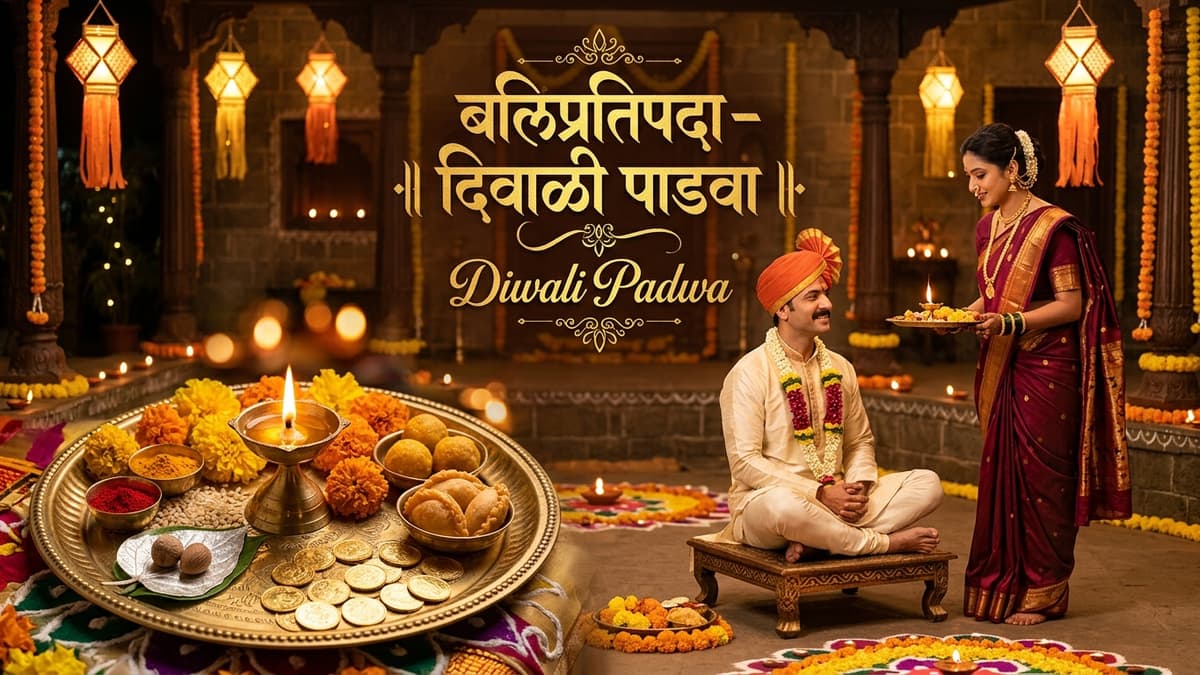
Balipratipada (Diwali Padwa)
बलिप्रतिपदा / दिवाळी पाडवा
Balipratipada (revered in Maharashtra as **Diwali Padwa - दिवाळी पाडवा**) is the fourth day of the Diwali celebrations, falling on the first day (Pratipada) of the bright fortnight in the sacred month of Kartik. In Maharashtra, this auspicious day carries dual cultural splendor: it is celebrated as the sacred festival of marital love and devotion between husband and wife, as well as the commemoration of the benevolent and righteous King Bali. For married couples across Maharashtra, Diwali Padwa is equivalent to Valentine's Day rooted in Vedic sanctity. Dressed in fine Paithani sarees and festive Kurtas, the husband is seated upon a decorated wooden platform (**Pat**) bordered with colorful Rangoli. The wife performs a loving ceremonial Aarti (**Auchan / ओवाळणी**) with a lighted ghee lamp, applying a fragrant sandalwood tilak to his forehead and praying for his long life, vitality, and worldly success. In return, the husband lovingly blesses his wife and presents her with a precious festive gift (**Padwa Bhet**), such as gold jewellery, a silk saree, or an affectionate token of appreciation. Simultaneously, households honor **King Bali (बळीराजा)**, drawing his noble portrait in colorful Rangoli outside the house and praying for agricultural prosperity, communal equity, and bountiful harvests with the historic Marathi chant: *'इडा, पीडा टळो आणि बळीचे राज्य येवो!'* (May all distress and misfortune be eliminated, and may the golden, just era of King Bali reign supreme!).
Kartiki Ekadashi
कार्तिकी एकादशी (प्रबोधिनी एकादशी) २०२६
Kartiki Ekadashi (कार्तिकी एकादशी), also celebrated as Prabodhini Ekadashi (प्रबोधिनी एकादशी) or Dev Uthani Ekadashi, is one of the two greatest spiritual pillars of Maharashtra's devotional landscape alongside Ashadhi Ekadashi. Falling on the bright eleventh day (Shukla Paksha) of the holy month of Kartik, this sacred day commemorates the celestial moment when Lord Maha Vishnu awakens from his four-month yogic slumber (Yoga Nidra / Chaturmas). His divine awakening heralds the resumption of auspicious ceremonies across the Hindu cosmos, culminating in the festive Tulsi Vivah. In Maharashtra, Kartiki Ekadashi is synonomous with the magnificent **Kartiki Wari** pilgrimage to the holy pilgrimage town of Pandharpur in Solapur district. Carrying saffron flags (भगवी पताका) and playing the cymbals (टाळ-मृदंग), hundreds of thousands of devout Warkaris converge on the sanctified banks of the Chandrabhaga River. Pilgrims sing the timeless abhangas of Sant Dnyaneshwar, Sant Tukaram, Sant Namdev, and Sant Chokhamela, eager to attain the life-transforming Mukh Darshan of Lord Vitthal (Vithoba) and Mother Rukmini standing majestically upon their historic brick altar. Families observe a strict day-long fast across Maharashtra, cleansing body and soul through fasting, devotional kirtans, and reading holy scriptures. The evening air resounds with chants of *'पुंडलिक वरदे हरी विठ्ठल, श्री ज्ञानदेव तुकाराम, पंढरीनाथ महाराज की जय!'*. The day concludes with preparations for Tulsi Vivah, as the holy basil shrub in every household courtyard is decorated with sugarcane stalks and tamarind branches to welcome Lord Vishnu as her eternal groom.
Tulsi Vivah
तुळशी विवाह
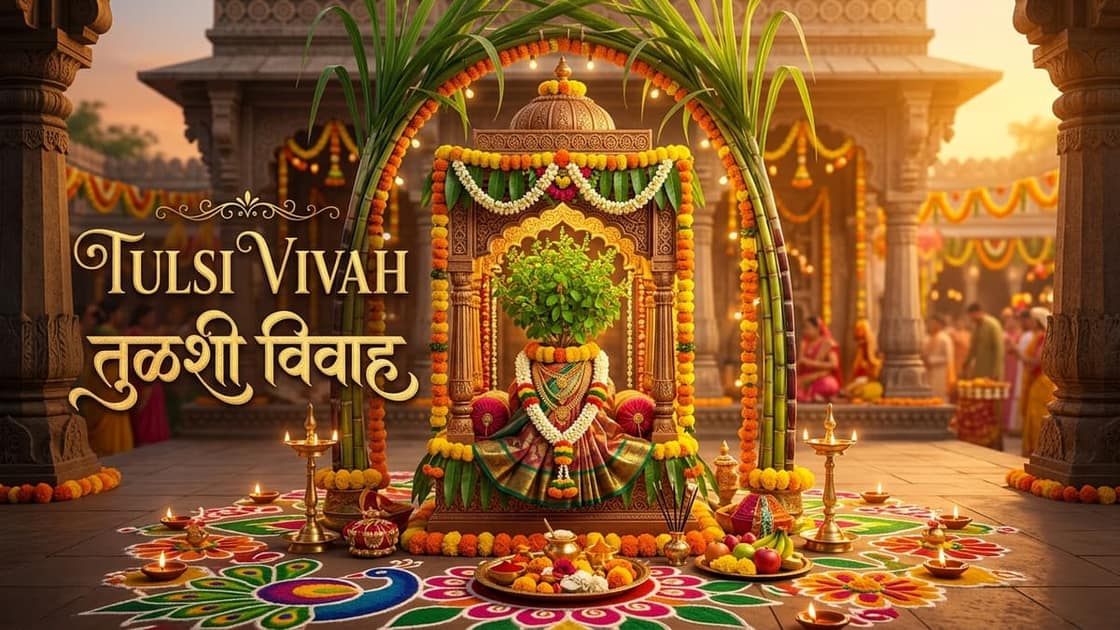
Tulsi Vivah (तुळशी विवाह) is one of the most aesthetically pleasing, joyful, and spiritually significant festivals celebrated across Maharashtra. Observed between Kartik Shukla Ekadashi (Prabodhini / Devutthana Ekadashi) and Kartik Purnima (Tripuri Purnima), with **Kartik Shukla Dwadashi** being the primary auspicious day, this divine celebration commemorates the ceremonial wedding of the holy basil plant (**Goddess Tulsi / Vrinda**) with **Lord Shaligram** (the sacred stone manifestation of Lord Vishnu). In Maharashtra, the courtyard or terrace **Tulsi Vrindavan** is transformed into a miniature royal wedding pavilion. The stone Vrindavan is painted with fresh ochre (Geru) and white lime (Chuna), while the ground is decorated with festive floral Rangolis. Four tall, green sugarcane stalks (**ऊसाचे खांब**) are erected around the Vrindavan to form the wedding canopy (Mandap), interwoven with leafy branches of wild tamarind (Chinch) and sweet gooseberry (Awala). The Tulsi plant is dressed like a traditional Marathi bride with a red or green silk Khan cloth, glass bangles, a nose ring (**Nath**), and flower garlands. A priest or family elder places the black Shaligram or Krishna idol opposite Tulsi, holds the traditional wedding curtain (**Antarpat**), and leads the entire family in chanting the soulful Marathi **Mangalashtakas**. When the final chorus of *'शुभमंगल सावधान!'* echoes, guests shower consecrated Akshata on the divine couple, signaling the auspicious commencement of the Hindu wedding season (**लग्नसराई**) across Maharashtra.
Kartik Purnima
कार्तिक पौर्णिमा २०२६
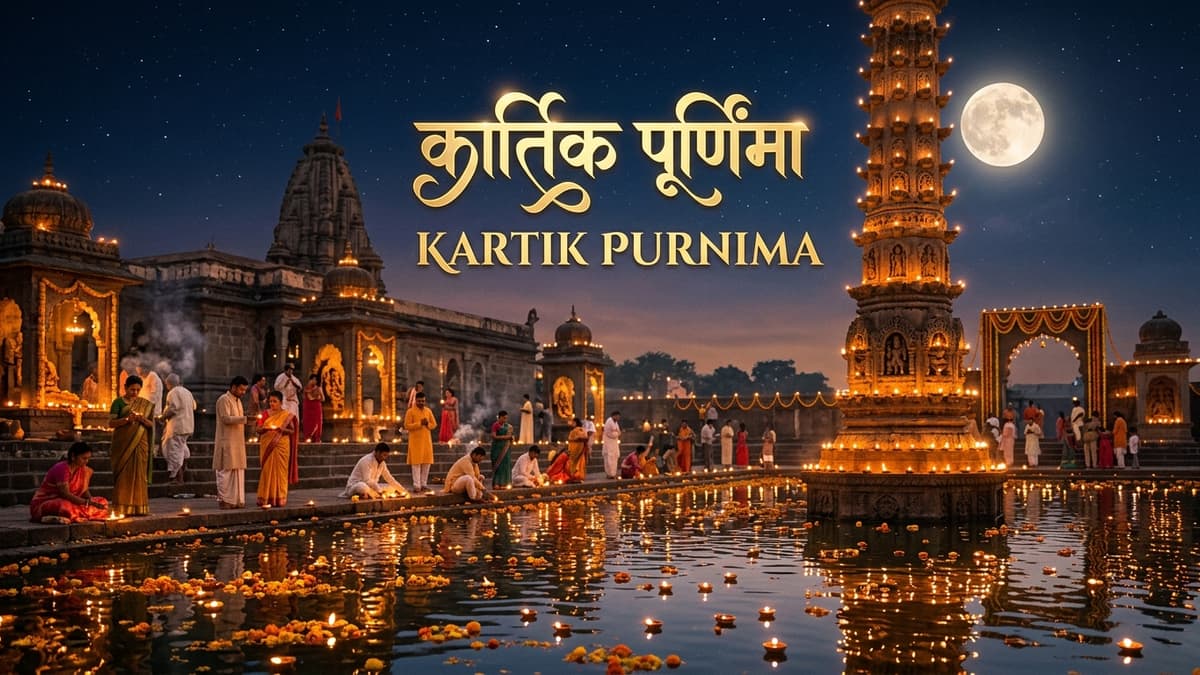
Kartik Purnima (celebrated with profound grandeur across Maharashtra as **Tripuri Purnima - त्रिपुरी पौर्णिमा** or **Dev Deepavali - देवदिवाळी**) is the most luminous, spiritually sacred full moon of the Hindu calendar. Occurring on the Purnima of the holy month of Kartik, this festival marks the celestial climax of the month-long Kartik vows, the conclusion of Tulsi Vivah ceremonies, and the triumphant celebration of Lord Shiva as **Tripurari** — the slayer of the cosmic demon Tripurasura. In Maharashtra, Kartik Purnima is celebrated as the **Diwali of the Gods**. Across historical temples such as Jejuri Khandoba, Tuljapur Bhavani, Kolhapur Mahalakshmi, Wai, and Trimbakeshwar, the towering stone lamp towers (**Deepamalas / दीपस्तंभ**) are completely ignited with thousands of flickering oil flames, turning the temple premises into glowing towers of divine light. In households, families illuminate their verandas, light riverside floating lamps (**Deepdan**), and prepare the sacred **360-wick ghee lamp (३६० वातींचा दिवा)** to burn away the accumulated karmic misdeeds of all 360 days of the year. Kartik Purnima is also revered as the birthday of **Lord Kartikeya** (the commander of the divine army) and **Matsya Avatar** (Lord Vishnu's first fish incarnation who saved the Vedas during the cosmic deluge). For the Sikh community in Maharashtra, this day is celebrated with deep devotion as **Guru Nanak Jayanti**.
Champa Shashthi
चंपाषष्ठी (खंडोबा उत्सव) २०२६
Champa Shashthi (चंपाषष्ठी) is one of the most culturally vibrant, spirited, and deeply revered folk and Shaivite festivals celebrated across Maharashtra. Celebrated on the sixth day (Shukla Shashthi) of the holy month of Margashirsha, Champa Shashthi honors Lord Khandoba — a fiery yet compassionate warrior manifestation of Lord Shiva, venerated as **Malhari Martand (म्हाळसाकांत मल्हारी मार्तंड)**. Lord Khandoba is the paramount Kuldaivat (family tutelary deity) for millions of Maharashtrian families, encompassing Dhangar, Maratha, Agri, Koli, Kunbi, and Brahmin communities alike. The festival marks the grand climax of the six-day **Khandoba Navaratri (चंपाषष्ठी षडरात्रोत्सव)** fast that begins on Margashirsha Pratipada. On this culminating day, historic shrines across the Deccan plateau, most famously the hilltop fort temple of **Jejuri Gad** near Pune, transform into seas of brilliant golden turmeric. Pilgrims enthusiastically fling handfuls of pure turmeric powder mixed with dry coconut shavings into the azure sky, yelling the thunderous victory battle-cry: *'येळकोट येळकोट जय मल्हार, सदानंदाचा येळकोट!'* (Yelkot Yelkot Jai Malhar, Sadanandacha Yelkot!). In every Maharashtrian household holding Khandoba as their Kuldaivat, Champa Shashthi is celebrated with the sacred **Tali Bharne (तळी भरणे)** ritual. Family members gather around a large brass plate containing five betel leaves, supari, turmeric powder, and dry coconut halves. The plate is lifted high by family members and moved in a circular motion five times before the deity, invoking divine protection. A rustic winter feast consisting of hot **Bajricha Rodga** (fire-roasted pearl millet bread) and smoky **Vangyache Bharit** (mashed roasted eggplant seasoned with green chilies, garlic, and fresh groundnut oil) is offered as Naivedya and shared with immense joy.
Gita Jayanti
गीता जयंती (मोक्षदा एकादशी) २०२६
Gita Jayanti (गीता जयंती), celebrated concurrently with the spiritually exalted Mokshada Ekadashi (मोक्षदा एकादशी), marks the supreme anniversary of the day Lord Sri Krishna revealed the immortal 700 verses of the **Shrimad Bhagavad Gita** to the grief-stricken warrior prince Arjuna on the battlefield of Kurukshetra. Occurring on the bright eleventh day (Shukla Ekadashi) of the holy month of Margashirsha, Gita Jayanti holds the unique distinction of being the only major Hindu celebration dedicated to the 'birth' of a sacred philosophical scripture rather than an avatar or saint. In Maharashtra, Gita Jayanti holds extraordinary devotional resonance through the prism of the **Dnyaneshwari (ज्ञानेश्वरी / भावार्थ दीपिका)** — the immortal 13th-century Marathi poetic commentary penned by the boy-saint Sant Dnyaneshwar at Nevasa. Sant Dnyaneshwar transformed the profound Sanskrit philosophy of the Gita into melodic Marathi Ovi meter, making the sublime teachings of selfless duty (Karma Yoga), devotional surrender (Bhakti Yoga), and spiritual knowledge (Jnana Yoga) accessible to the common farmer, artisan, and householder. On Gita Jayanti, temples, ashrams, and Warkari study circles throughout Maharashtra organize non-stop recitations of all 18 chapters of the Gita and Dnyaneshwari. As Mokshada Ekadashi, the day is also observed with a complete satvik fast. Devotees offer fragrant Tulsi leaves and yellow flowers to Lord Krishna and Lord Vishnu, distributing copies of the Gita to students and spiritual aspirants. It is believed that listening to, reciting, or meditating upon even a few shlokas of the Gita on this holy day dissolves the knots of existential sorrow, dispels ignorance, and guides the soul toward liberation (Moksha).
Datta Jayanti
दत्त जयंती
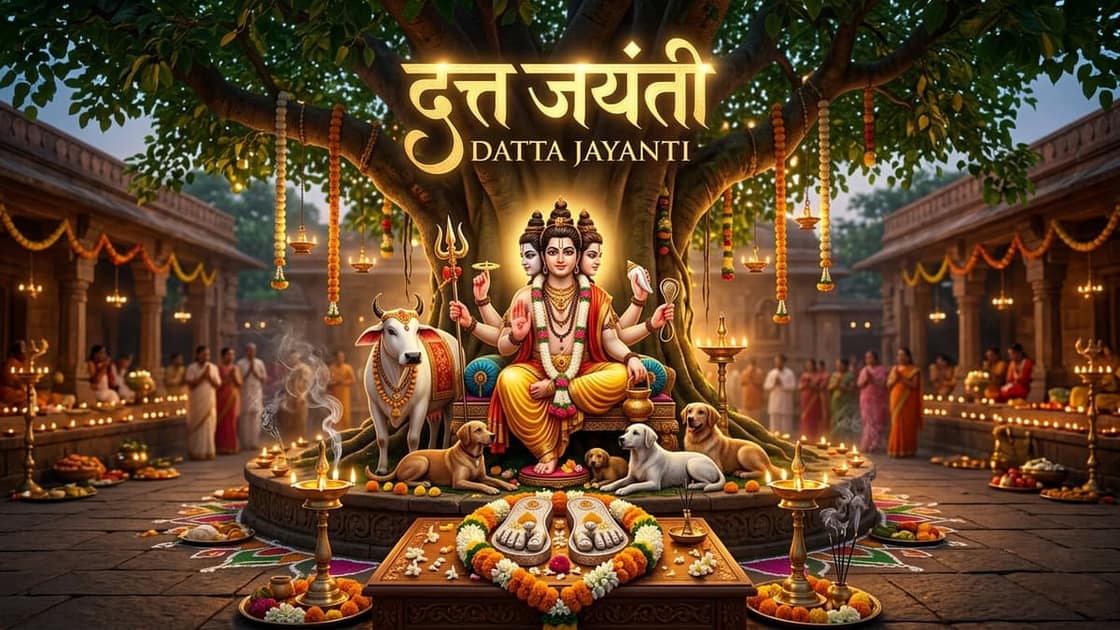
Datta Jayanti (दत्त जयंती), also celebrated as Dattatreya Jayanti, is observed with profound spiritual devotion and festive grandeur across Maharashtra. Falling on the full moon day of Margashirsha (Margashirsha Shukla Purnima), this auspicious festival marks the divine incarnation of Lord Dattatreya — the unified manifestation of the Holy Trinity (**Trimurti**: Lord Brahma the Creator, Lord Vishnu the Preserver, and Lord Shiva the Destroyer). Lord Dattatreya is revered as the Adi Guru (Supreme Universal Teacher) and the master of wisdom, nature, and self-liberation. Throughout Maharashtra, sacred pilgrimage sites (**Datta Kshetras**) such as **Narsobachi Wadi**, **Audumbar**, **Gangapur**, **Mahur Gad** (the sacred hill of Renuka Mata and Lord Datta's resting place), and **Karanja Lad** witness lakhs of visiting devotees. Thousands of families and spiritual centers participate in the intense 7-day reading of the sacred scripture **Shri Gurucharitra (गुरुचरित्र सप्ताह पारायण)**. The defining highlight of the festival takes place precisely at sunset (Godhuli / Sandhya Kaal), believed to be the exact cosmic moment of Lord Dattatreya's divine descent. Shrines and households echo with the rocking of the decorated flower cradle (**पाळणा सोहळा**), while devotees sing soul-stirring hymns and chant: *'दिगंबरा दिगंबरा श्रीपाद वल्लभ दिगंबरा!'* and *'अवधूत चिंतन श्री गुरुदेव दत्त!'*. The divine depiction of Lord Dattatreya is deeply symbolic: he has three heads representing the Trimurti, six arms holding sacred emblems (Trishula, Damaru, Shankha, Chakra, Kamandalu, and Japa Mala), four faithful dogs representing the four Vedas (Rig, Sama, Yajur, Atharva), and the holy wish-fulfilling cow Kamadhenu representing Mother Earth and spiritual nourishmment.