
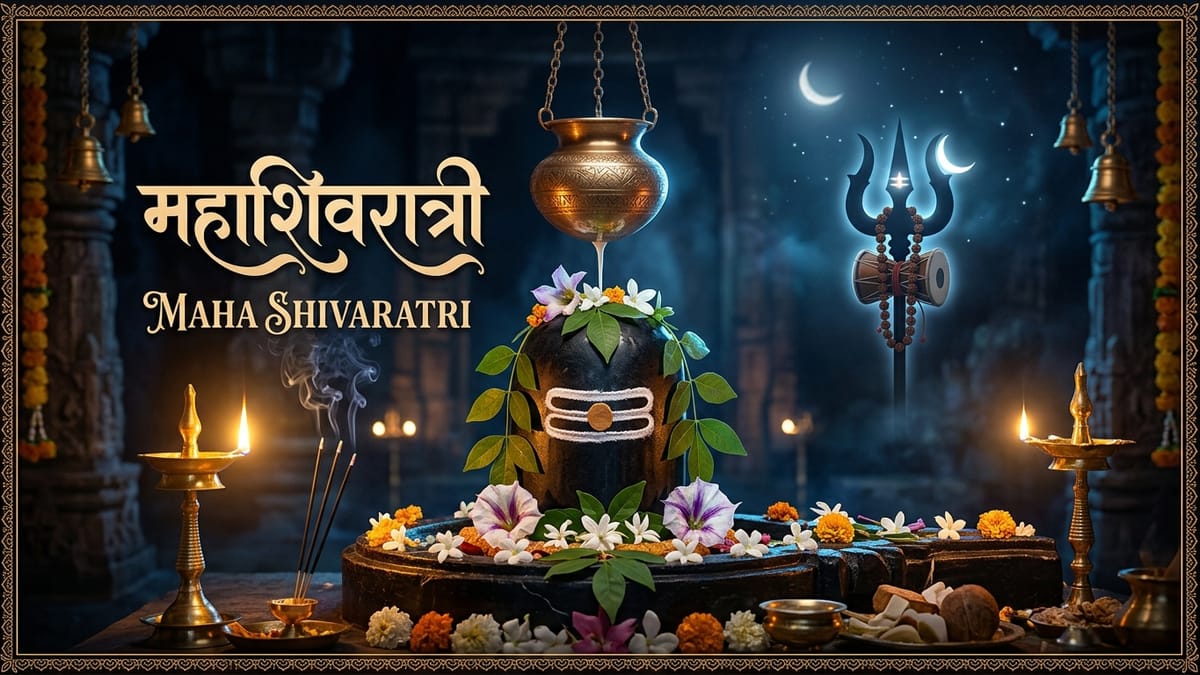
Maha Shivaratri 2026 | महाशिवरात्री २०२६
Looking for calendar views and tithis?
Read more about the exact tithi timings and planetary alignments in our comprehensive February 2026 Calendar.
About Maha Shivaratri(उत्सव माहिती)
Maharashtra holds an extraordinary spiritual connection to Lord Shiva, being blessed with five of the twelve revered Jyotirlingas across India: Trimbakeshwar (Nashik), Bhimashankar (Pune/Sahyadris), Grishneshwar (Ellora, Chhatrapati Sambhajinagar), Aundha Nagnath (Hingoli), and Parli Vaijnath (Beed). Millions of devotees undertake pilgrimages to these ancient rock-cut sanctums, chanting *'हर हर महादेव!'* and *'ॐ नमः शिवाय!'*.
In homes and temples throughout the state, devotees observe an unbroken 24-hour fast (Upavas) and an all-night spiritual vigil (Jagaran). The centerpiece of Maha Shivaratri worship is the Char Prahar Puja (four-quarter night worship), during which the sacred Shiva Linga is bathed continuously with holy water, unboiled milk, honey, sugarcane juice, and curd (Panchamrit Abhishekam), accompanied by offerings of fragrant trifoliate Bilvapatra (बेलपत्र), white dhatura flowers, and cooling bhasma (vibhuti).
1. Samudra Manthan and the Consumption of Halahala: During the churning of the cosmic ocean by the Devas and Asuras, a lethal poison named Halahala emerged, threatening to incinerate all creation. Filled with supreme compassion, Lord Shiva consumed the venom, holding it in his throat without swallowing. The venom turned his neck dark blue, earning him the immortal title Neelkantha (the Blue-Throated One). To soothe his burning throat, the gods poured cold river water and milk over him and offered cooling bilva leaves throughout the night, staying awake in prayer and gratitude.
2. The Manifestation of the Jyotirlinga Pillar: On this cosmic night, Lord Shiva manifested as an infinite, blazing pillar of light (Jyotirlinga) without beginning or end, humbling Lord Brahma and Lord Vishnu and revealing the infinite, formless reality of supreme consciousness.
3. Maratha Devotion to Mahadev: Chhatrapati Shivaji Maharaj was an ardent devotee of Lord Shiva (revering Sri Mahadev as the presiding deity of Hindavi Swarajya). Maha Shivaratri was observed with royal state Abhishekam across Maratha hill-fort shrines such as Rajgad, Raigad, and Pratapgad.
- Planetary Alignment & Spiritual Awakening: On the night of Maha Shivaratri, the northern hemisphere of Earth is positioned such that there is a natural upsurge of cosmic energy in the human body. Staying awake and maintaining an upright spine during Jagaran naturally assists spiritual seekers in raising Kundalini energy.
- The Power of Bilvapatra: The sacred Bilva leaf has three leaflets symbolizing the three Gunas (Sattva, Rajas, Tamas), the three eyes of Shiva, and the Trimurti. Offering a single unblemished Bilva leaf with devotion is said to cleanse three lifetimes of karmic sins.
- Char Prahar Pujan Merit: Dividing the night into four quarters and performing Abhishekam with milk (1st Prahar), curd (2nd Prahar), ghee (3rd Prahar), and honey (4th Prahar) brings spiritual purification, health, peace of mind, and liberation (Moksha).
Rituals & How to Celebrate
Traditional Foods & Bhog
Festival Calendar
Maha Shivaratri
२८ माघ • महाशिवरात्री २०२६
Related Festivals & Celebrations
संबंधित मराठी सण, उत्सव आणि व्रते
 13 September
Hartalika Teej
हरितालिका तीज
 25 June
Ashadhi Ekadashi
आषाढी एकादशी
 24 November
Kartik Purnima
कार्तिक पौर्णिमा २०२६
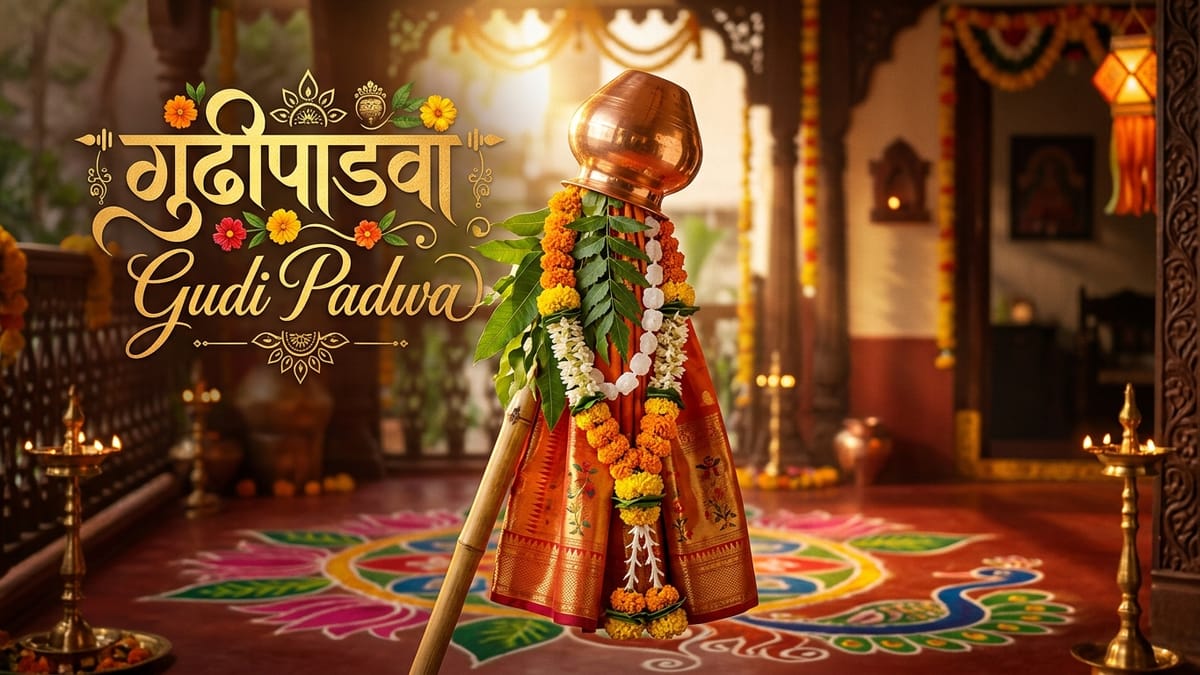 19 March
Gudi Padwa
गुढी पाडवा २०२६
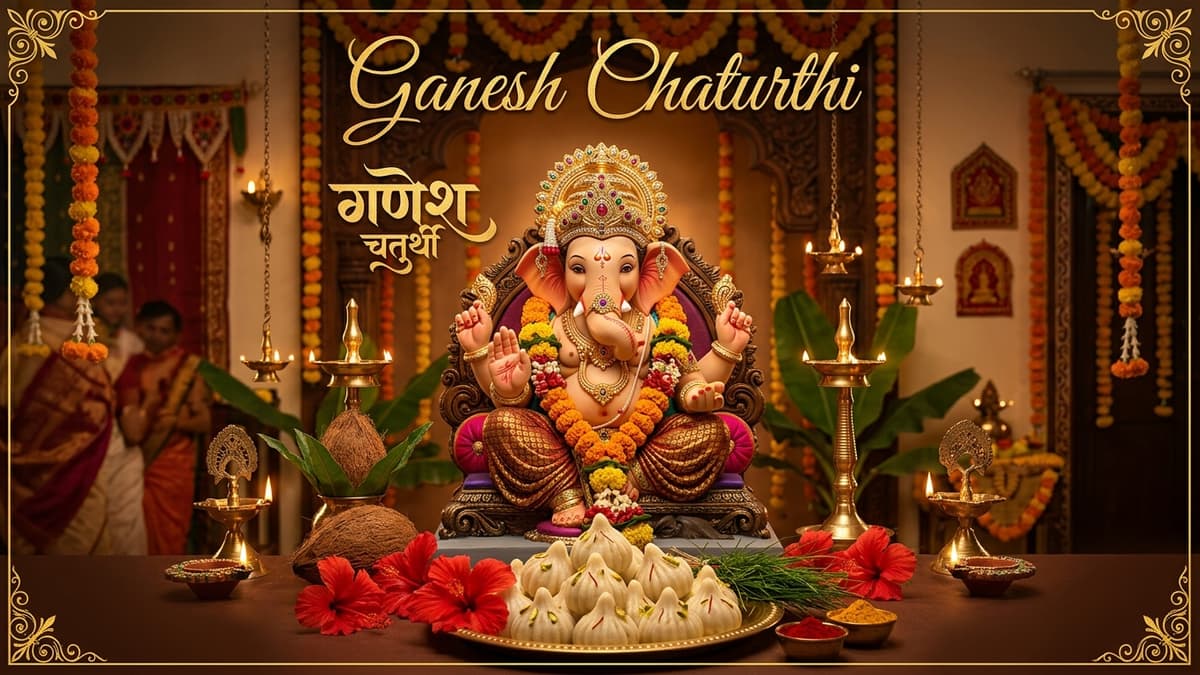 14 September
Ganesh Chaturthi
गणेश चतुर्थी २०२६
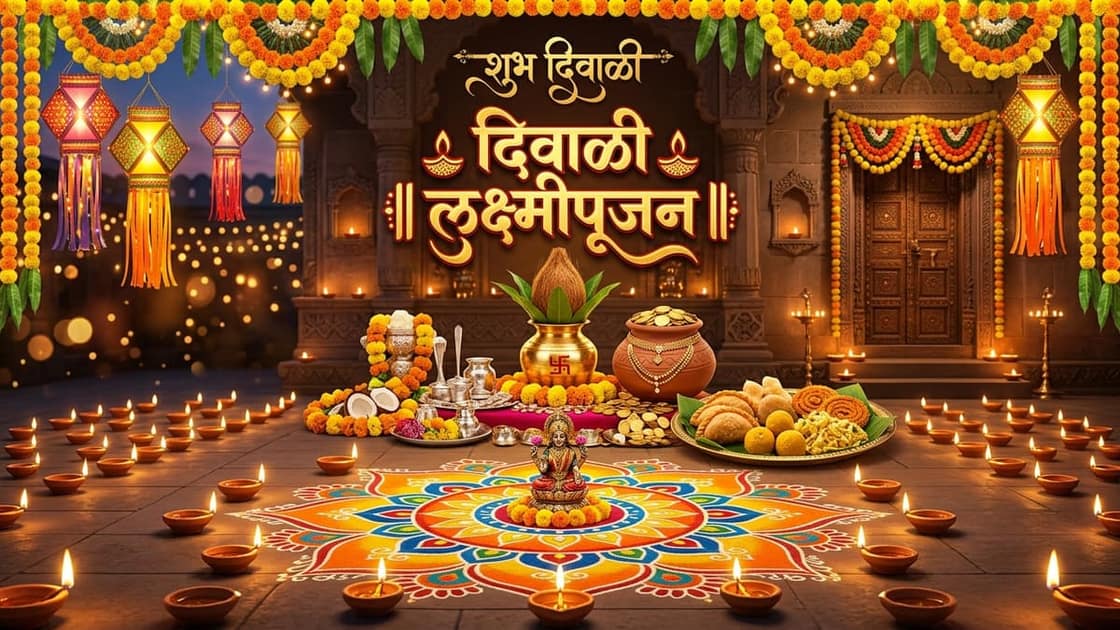 9 November
Diwali
दिवाळी २०२६
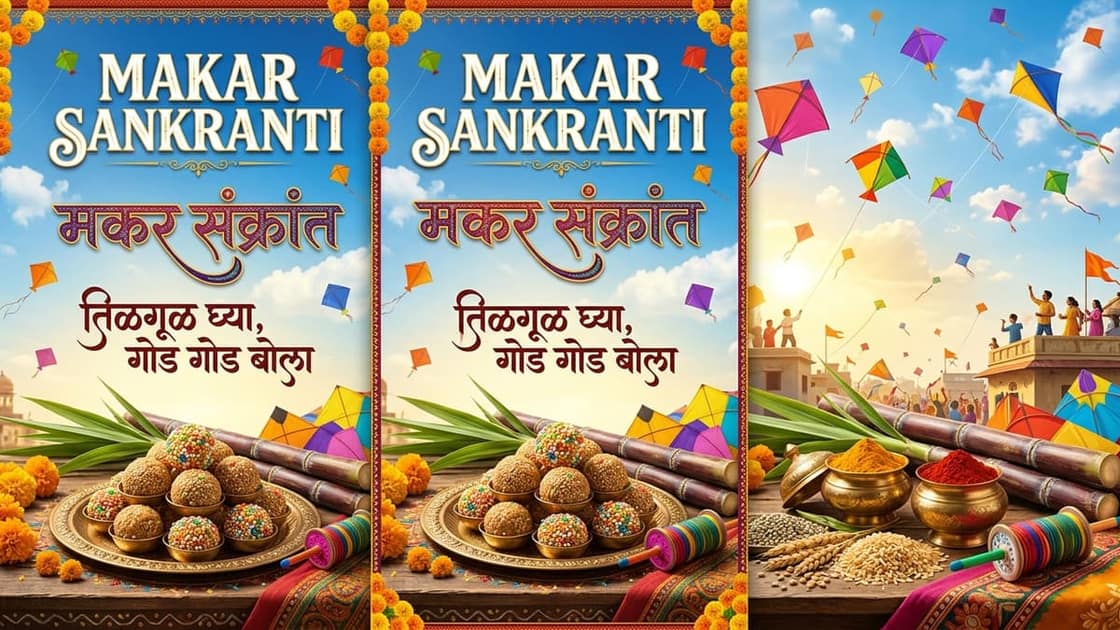 14 January
Makar Sankranti
मकर संक्रांती २०२६
 11 October
Navratri
नवरात्री